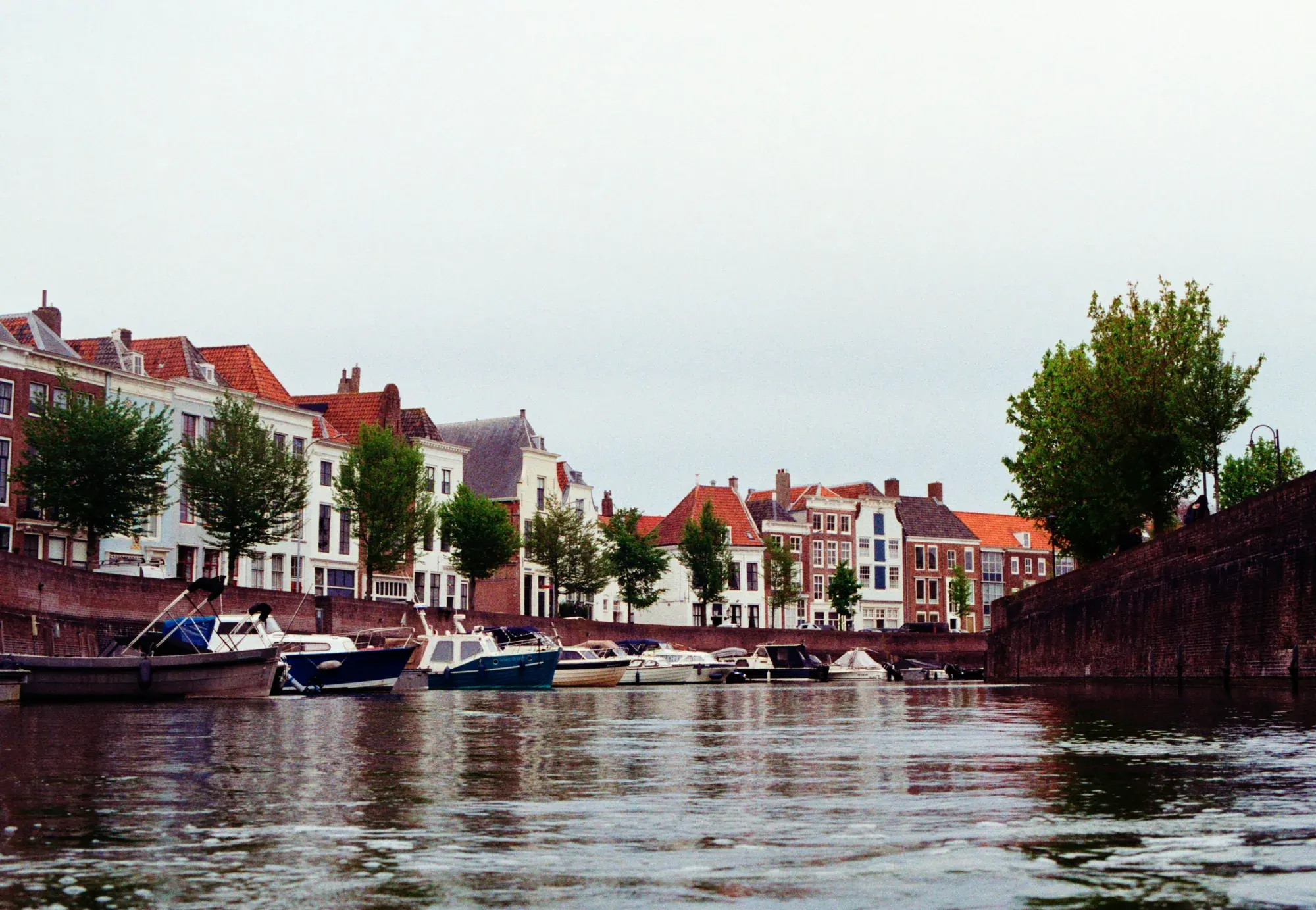
Middelburg is the capital of Zeeland and, at the height of the Dutch East India Company, one of the most important cities in the country. It had the second largest number of historic buildings in the Netherlands after Amsterdam, more than eleven hundred listed structures in the old town, and it lost a great many of them in a single day in May 1940. What stands now is a mix of what survived and what was patiently rebuilt, arranged around a twelfth-century abbey and a market square with a Gothic town hall. It is the least visited of the great Dutch historic centres, mostly because it is a long way from everywhere else.
ProvinceZeeland, of which it is the capital
From AmsterdamAbout 2.5 hours by train
From RotterdamAbout 1.5 hours by train
Known forThe abbey, VOC history and Zeeland tapestries
Things to see & do
Highlights in Middelburg
01
The Abdij, the abbey complex
Founded in the twelfth century by Norbertine monks and grown into a walled complex of three churches, five towers and a set of gates. The two-year siege of Middelburg in 1572 to 1574 ended monastic life here by force, and the buildings passed to the province, which still governs from them. Walking into the abbey courtyard is free.
The courtyard is the quietest corner of the centre and the best place to start, because everything else radiates from it.
The tallest of the abbey towers, visible from most of Walcheren and climbable by visitors. The view explains the geography better than any map: a flat island of polders, sea dykes and water on three sides.
Climbing is seasonal and weather-dependent. Check on the day rather than building the visit around it.
The provincial museum, inside the abbey at Abdij 4, known above all for its tapestries showing sixteenth-century sea battles in Zeeland waters, alongside historic Zeeland costume and a cabinet-of-curiosities collection.
The tapestries are the reason to go. They are contemporary propaganda as much as art, woven while the war they show was still being fought.
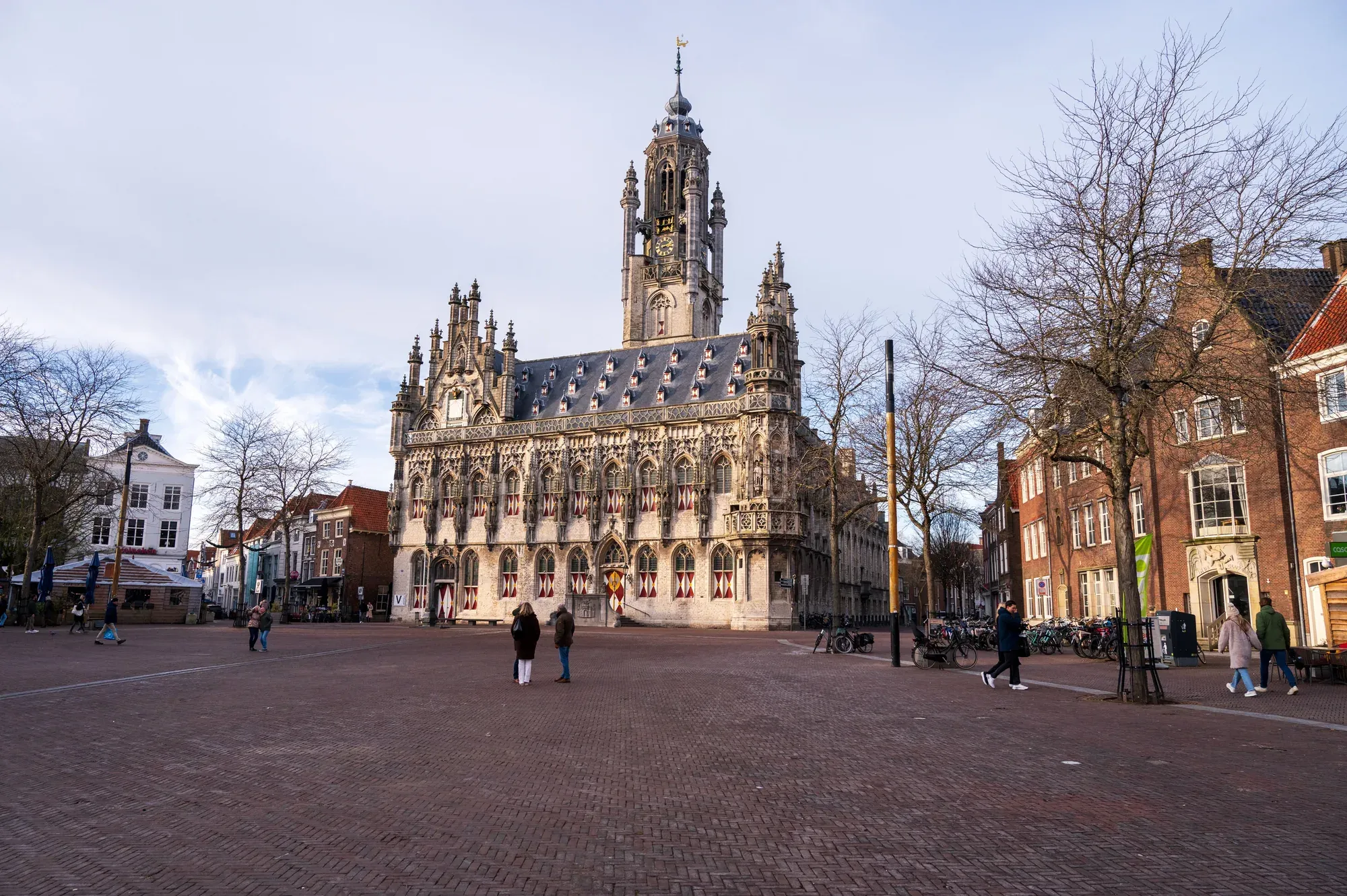
One of the finest Gothic town halls in the country, its fourteenth-century market-square facade lined with statues of the counts and countesses of Zeeland. The building burned out in the 1940 bombardment and the facade you see was rebuilt over decades afterwards.
Stand well back on the Markt to take it in. The square doubles as the market on Thursdays, which is when the centre feels most like a working city.
05
What May 1940 did, and what came after
German shelling and the fires that followed destroyed much of the historic core in a single day. Hundreds of monuments were damaged or lost. The reconstruction that followed was unusually careful, rebuilding in the old forms rather than replacing them, which is why the centre reads as historic while much of it is under a century old.
Ask a guide to point out the seams. Once you can see where 1940 ends and the rebuild begins, you cannot unsee it, and it is the most interesting thing about the city.
Good to know
Practical information
Getting thereMiddelburg is on the intercity line to Vlissingen. From Amsterdam Centraal expect around two and a half hours, usually with one change, and from Rotterdam Centraal about an hour and a half. By car it is roughly two hours from Amsterdam and an hour and a quarter from Rotterdam. The station sits a ten-minute walk from the Markt.
Getting aroundThe historic centre is small, flat and best walked. Everything in this guide sits within fifteen minutes of the abbey. Zeeland beyond the city is cycling country, and bikes can be hired near the station.
Best time to visitMay to September, when the tower climb and the terraces are open and Zeeland's weather cooperates. Thursday is market day on the Markt. Winter is quiet in a way that suits the abbey and does not suit much else.
Time neededHalf a day for the abbey, the Markt and one museum. A full day if you are coming from Amsterdam or Rotterdam, because the journey deserves it.
Tickets & passesThe abbey courtyard, the Markt and the streets are free. The Zeeuws Museum and the Lange Jan climb are ticketed separately, and the tower is not always open. Check both on the day of your visit rather than in advance.
From our guides
Worth knowing before you go
Do not treat this as a stop on the way to somewhere else. Middelburg is far enough from the Randstad that a rushed two hours here is worse than not coming.
Thursday is market day on the Markt, which is the one day the square is full of Zeelanders rather than visitors.
If you have a car, Veere and the Walcheren coast are twenty minutes away and make the long journey down here worth far more.
For a full day, yes, if you like historic cities and want one that is not crowded. It is about two and a half hours each way by train, so it does not work as a half-day trip, and anyone with only a few days in the Netherlands is usually better served by Delft, Leiden or Haarlem.
What happened to Middelburg in the Second World War?
Much of the historic centre was destroyed by shelling and fire in May 1940, including the interior of the Gothic town hall. Hundreds of monuments were damaged or lost. The city was rebuilt in its historic forms over the decades that followed, which is why the centre looks older than much of it is.
Can you climb the Lange Jan?
Yes, the abbey tower is open to visitors, though opening is seasonal and depends on the weather. Check on the day rather than planning the visit around it.
How long do you need in Middelburg?
Half a day covers the abbey, the market square and one museum at a comfortable pace. A full day lets you add the coast or Veere, which is what most people who travel this far end up doing.
Do you offer a private guided tour of Middelburg?
Yes. We run a private walking tour of the historic centre with a local guide, covering the abbey, the Markt, the VOC history and the story of the 1940 bombardment and the reconstruction.
Help us make this site better. Cookies show us which pages confuse people, so we can fix them. We never sell your data, and you can change your choice any time. Privacy policy
Your cookie choices
Cookies are small files a website leaves in your browser so it can recognise it later. We use them for two things and nothing else: keeping the booking process working, and seeing where visitors get stuck so we can fix those pages. We do not advertise to you and we never sell your data.
Strictly necessary
Always on
Keeps your booking and payment session with our checkout provider Mollie alive, protects the forms against abuse, and remembers the choice you make here for six months. No tracking, no profiling, and nothing is shared for marketing. The site cannot work without these, so they cannot be switched off.
Microsoft Clarity and PostHog show us which pages people leave, where they hesitate, and what they never find. On: they can recognise your browser across pages and repeat visits, and record a replay of your visit with anything you type hidden. That means cookies: Clarity’s _clck (1 year) and _clsk (1 day), and PostHog’s own cookie (1 year). Off: no cookies, and nothing stored on your device. Both still count the pages you view, and PostHog ties the pages of a single visit together using a code built from your IP address and browser that is renewed every day and cannot be turned back into either. So we can see that one visit read three pages, and we cannot recognise you tomorrow. No replay, no profile, no linking one day to the next.
Run for us by Microsoft Ireland Operations Ltd and PostHog Inc. Neither is allowed to sell this data or use it for advertising.
Whatever you pick, you can change it later from the privacy policy — and changing it to off deletes the cookies again.