Holland City Tours Holland City Tours
Holland City Tours
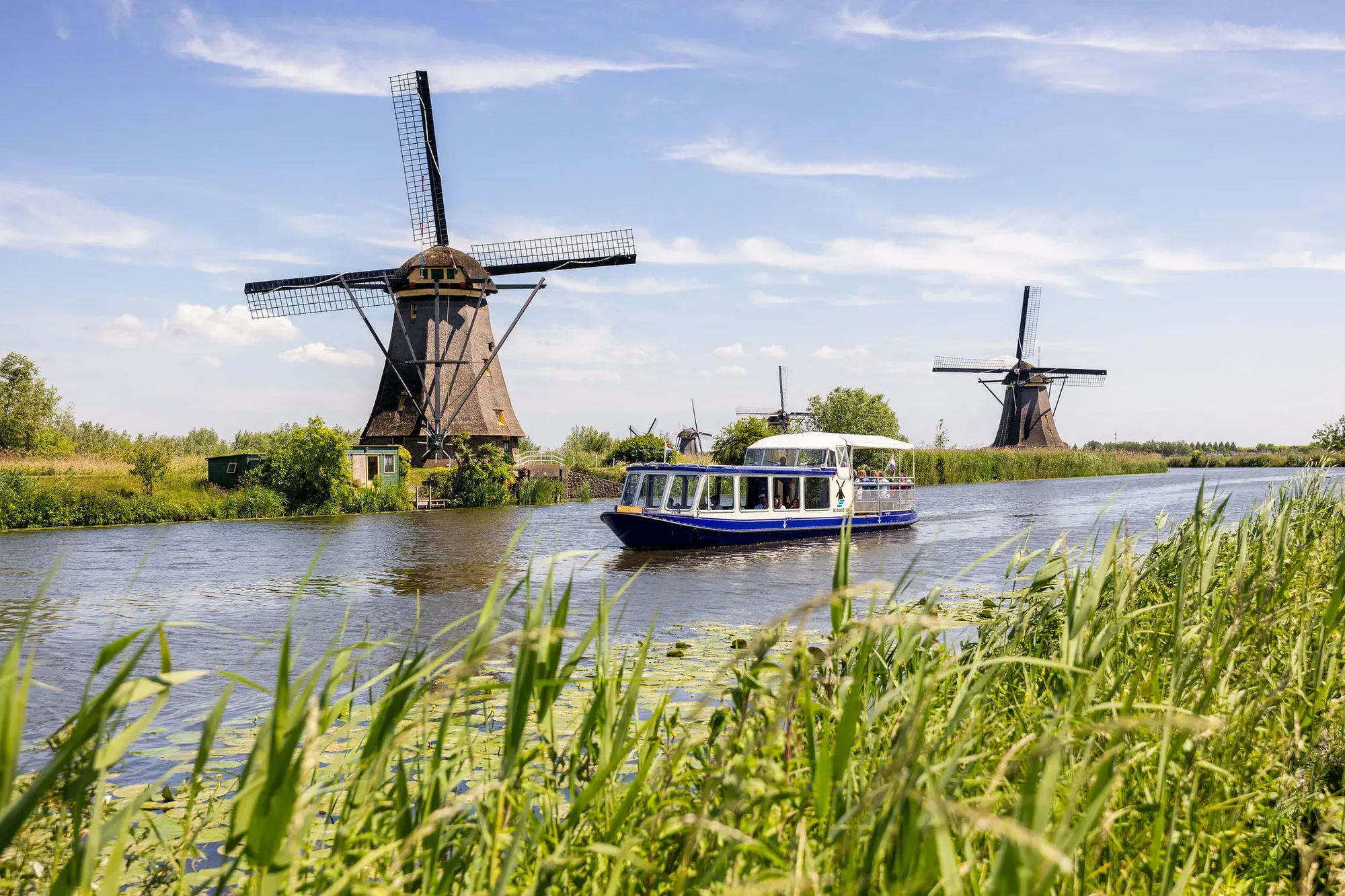
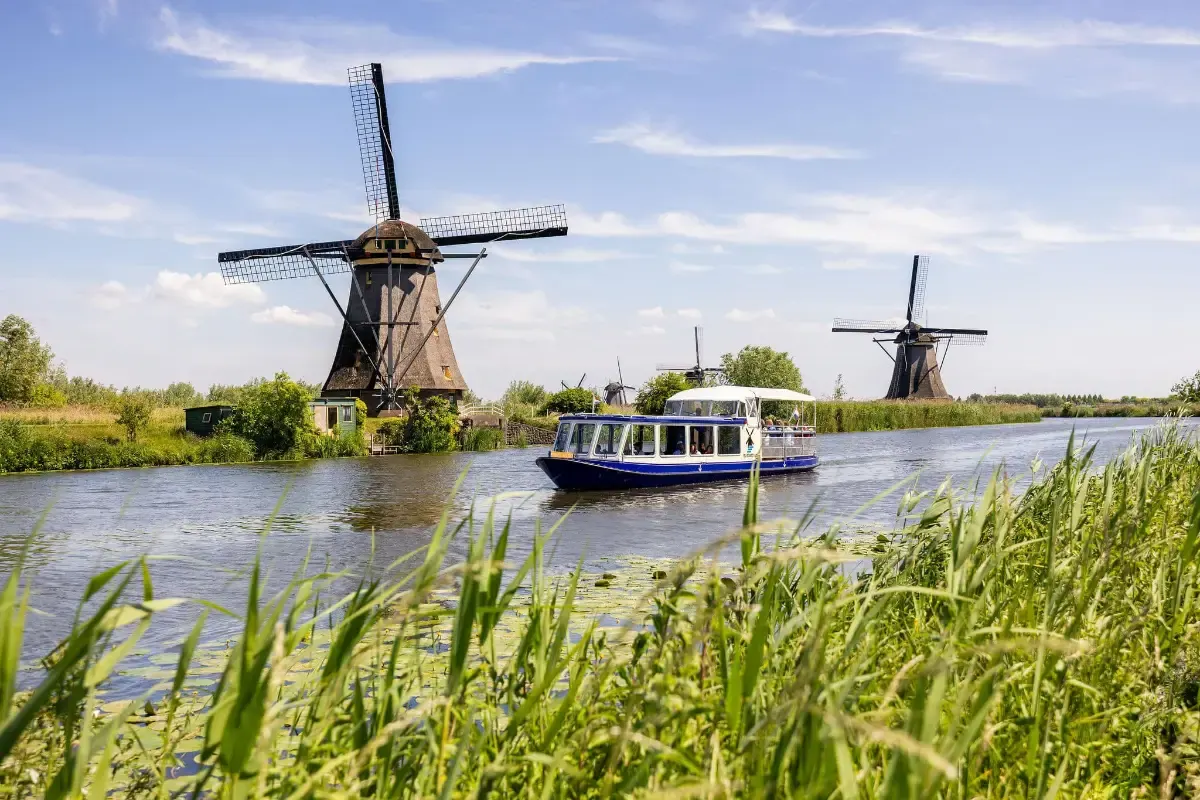
A small tour boat passing the Kinderdijk windmills along a reed-lined canal in summer
← All destinations Destination

Kinderdijk

See our tours →

Kinderdijk is the largest concentration of historic windmills in the Netherlands: nineteen of them, most built in 1738 and 1740 to drain the Alblasserwaard polder, and a UNESCO World Heritage Site since 1997. It is not a village or a museum park but a working water-management landscape you walk through, along a flat dike between two rows of mills. Two are open as museums, still furnished as the miller families left them.

Province Zuid-Holland
Windmills 19, two open as museums
UNESCO World Heritage since 1997
From Rotterdam About 30 min by WaterShuttle
Book a tour

Tours in Kinderdijk

Single city

Private tour of Kinderdijk

New tour

Nineteen windmills from 1738 and 1740 in one UNESCO landscape: a private guide, the boat along the mills and a working mill from the inside, with an optional start in Rotterdam.

Entrance and boat trip included
Duration Up to 1.5 hours Price from €224

Free cancellation up to 24h before

Two cities

Private tour of Rotterdam & Kinderdijk

New tour

Rotterdam's Cube Houses, Markthal and skyline, then thirty minutes down the river by WaterShuttle to the nineteen UNESCO windmills of Kinderdijk. One private half day, all tickets included.

WaterShuttle and all tickets included
Duration 4.5 hours Price from €449

Free cancellation up to 24h before

Self-guided

Self-guided audio tour of Kinderdijk

5.0 (3 reviews)

A 75-minute self-guided VoiceMap audio tour of Kinderdijk, the UNESCO World Heritage windmill park.

Duration 75 min Price €7.99 Language English

Shore excursions from Rotterdam

For cruise guests, timed around the ship.

Things to see & do

Highlights in Kinderdijk

01

Museum Mill Nederwaard

A working mill of 1738 that you climb through, past the millers' family objects, historic photographs and the enormous wooden gearing that drives the scoop wheel. Entry is covered by the standard ticket.

Wear flat shoes. The internal stairs are closer to ladders, and a backpack makes them harder.

Official site
02

Museum Mill Blokweer

The older of the two open mills, first built in 1630 and rebuilt in 2001, and furnished to show miller family life in the 1950s, when people still lived and worked in these buildings. There is a scavenger hunt through the yard aimed at children.

The better of the two for families. Do it before Nederwaard, while children still have energy for stairs.

Official site
03

The Wisboom pumping station

The 1868 steam-era pumping station is the site's orientation point, and explains why nineteen mills were needed here at all - and why they were eventually not enough. Included in the ticket, along with the audio tour.

Start here rather than at the mills, so the dike walk makes sense when you do it.

Official site
04

The boat along the mills

A boat trip along the two rows of mills is part of the entrance ticket rather than an add-on, giving the classic waterline view of the Nederwaard and Overwaard rows that you cannot get from the dike.

Sailings can pause in high wind, so take the boat when you arrive rather than saving it for last.

Official site
05

Illumination Week in September

For a few evenings each September all nineteen mills are lit after dark, and the reflections double them in the water. Boat operators run evening cruises from Rotterdam for it.

The evening cruises sell out well ahead. Book as soon as the dates are published.

Official site
Good to know

Practical information

Getting there Bus 489 runs from Rotterdam Kralingse Zoom, on the metro, to Kinderdijk Molenkade in about thirty-five minutes, twice an hour, seven days a week. From Dordrecht a direct bus runs on weekdays, or you change at Alblasserdam. The WaterShuttle sails from the Erasmusbrug in Rotterdam to the Kinderdijk mills in about thirty minutes, every day from late March to late October and Friday to Sunday in winter, and carries bikes free.
Getting around The site is a flat dike walk of roughly three kilometres between the two mill rows, best covered on foot or by bike. The boat included in the ticket saves the return leg.
Best time to visit March to early November, when the mills are staffed and the hours are longest; in January and February the site opens weekends only, with a closure in early January. Arrive at opening or after mid-afternoon to miss the river-cruise coach groups that dominate late morning.
Time needed Two and a half to four hours for both museum mills, the pumping station and the boat.
Tickets & passes One entrance ticket - EUR 21 for adults, EUR 9 for children aged 4 to 12, free under 4 - covers the boat, both museum mills, the pumping station, the bird theatre and the film at De Fabriek. Booking online takes 10 percent off and gives you a date and time slot. Parking, the WaterShuttle and the small foot ferry are all separate payments.
From our guides

Worth knowing before you go

  • The regular Waterbus and the tourist WaterShuttle are different services. The small Driehoeksveer foot ferry that finishes the trip from Dordrecht is a third, and your Waterbus ticket is not valid on it.
  • Drones are banned across the whole mill area, which is a Natura 2000 bird reserve as well as a heritage site.
  • River cruise ships unload coach groups here in late morning. Coming at opening or after three in the afternoon gives you a genuinely different place.
Gallery

Kinderdijk in pictures

Plan your visit

Useful links

Keep exploring

Nearby destinations

DordrechtRotterdam
Arriving with a group, or with bags

Coach parking & luggage lockers

Coach drop-off & parking

Coaches use the Stop & Go zone at the World Heritage site entrance, then park at the Bus & Camper parking on the Lekdijk in Nieuw-Lekkerland, about a kilometre away. It costs €22.50 per coach and must always be reserved in advance through the site.

Official coach information

Luggage lockers

Kinderdijk has no lockers or bag storage, and no railway station. The nearest NS lockers are at Rotterdam Centraal, the usual transfer point for the waterbus.

Locker sizes and prices
Questions

Frequently asked questions

Is Kinderdijk worth visiting as a day trip from Rotterdam?

Yes, it's one of the closest and most iconic windmill sites in the Netherlands, easily reached from Rotterdam by bus, bike, or waterbus.

Do the windmills at Kinderdijk still work?

Yes, though modern pumping stations now handle most of the drainage, the windmills remain operational as a backup system and are occasionally set in motion, especially on windy days.

Do you offer a private guided walking tour of Kinderdijk?

Yes. Our private tour of Kinderdijk takes up to ninety minutes with your own guide, entrance ticket and boat trip included, and you can add a start in Rotterdam with the guide travelling with you by WaterShuttle. There is also a half-day private tour of Rotterdam and Kinderdijk, and a self-guided VoiceMap audio tour covering the windmill row and its history.

When is Kinderdijk open, and what does a ticket cost?

From early March to 1 November daily from 9:00 to 17:30, and in winter from 10:30 to 16:00, closed on 25 December, with reduced opening in January and February. An adult ticket cost €21 in 2026. The windmills can also be seen for free from the public path along the canal.

How do I get to Kinderdijk without a car?

By bus 489 from Rotterdam's Kralingse Zoom metro station, about 35 minutes, or by the commercial boat service from Rotterdam. The direct public waterbus stopped in October 2025, so older guides are out of date. From Amsterdam, count on two to three hours each way by public transport.

Kinderdijk or Zaanse Schans?

Kinderdijk if you want windmills in an open landscape: 19 mills from the 18th century on a UNESCO World Heritage site near Rotterdam. Zaanse Schans if you are based in Amsterdam with little time: it is 20 minutes away, with working mills, but busier and with buildings moved there from elsewhere.