
Beyond the Canals
Amsterdam is a working city built on wooden piles and merchant money, and the parts worth seeing are rarely the parts the crowds are standing in. This private walking tour starts at the Dam, where the city literally began, and works west and south into the canal ring that UNESCO listed as World Heritage in 2010.
Along the way your guide explains how to read a canal house: the narrow plots, because tax followed the width of the frontage; the hoisting beams still in daily use, because the staircases never were; the deliberate forward lean so that goods clear the facade; and the gable styles that date a building to within a few decades.
Because this is a private tour, the route and the pace are yours. There is also a practical reason to keep it small. Amsterdam caps guided groups in the city centre at fifteen people, bans amplification outright, and forbids guided tours entirely in three areas of the centre. A small private group is not a luxury here, it is the only way to hear your guide.
What you'll see on this tour
What people say about us
“Our guide Elena Romanelli is extraordinary. This was the best tour of our trip, Elena connected the historic context with the art in every room of the museum giving us an unforgettable history and art lesson in one hour.”
 Viator · August 2026
“In a small group, as part of an anniversary, took a two-hour private walk with guide Furat. It was relaxed and cozy with a nice mix of historical and contemporary facts. Because we have a personal history with the city, the route was also adapted to our wishes. Absolutely wonderful.”
“In klein comité in het kader van een jubileum een privéwandeling van twee uur gedaan met gids Furat. Het was ongedwongen en gezellig met een leuke mix van historische en hedendaagse weetjes. Omdat we een persoonlijke geschiedenis met de stad hebben was de route ook op onze wensen aangepast. Helemaal geweldig.”
Translated from Dutch
“We really had a great tour. Not just historical facts and information But really nice stories about the real life of people. We enjoyed it so much!”
 Google · September 2026
What's included
Included
- Private guide
- 2-hour private walking tour
Not included
- Food and drinks
- Museum and attraction entrance tickets
- Gratuities for the guide (optional)
- Pick-up and drop-off in another city (can be added to your booking at check-out)
What to expect
The Beurs van Berlage and the Damrak
Berlage's commodities exchange of 1896 stands on the filled-in stretch of the Damrak that was once the harbour mouth of the Amstel. A good place to start with the dam itself and with why a city built on marsh needs wooden piles under everything.
Meeting point: In front of the main entrance of the Beurs van Berlage, Damrak 243. You can also choose a custom starting location. Just add it as a comment when you book.
Dam Square, the Royal Palace and the Nieuwe Kerk
The Royal Palace was built as the city hall between 1648 and 1656 on 13,659 wooden piles, and became a palace only in 1808 when Louis Napoleon moved in. Beside it stands the church where Dutch monarchs are inaugurated, and the national war memorial of 1956.
Spui and the gate of the Begijnhof
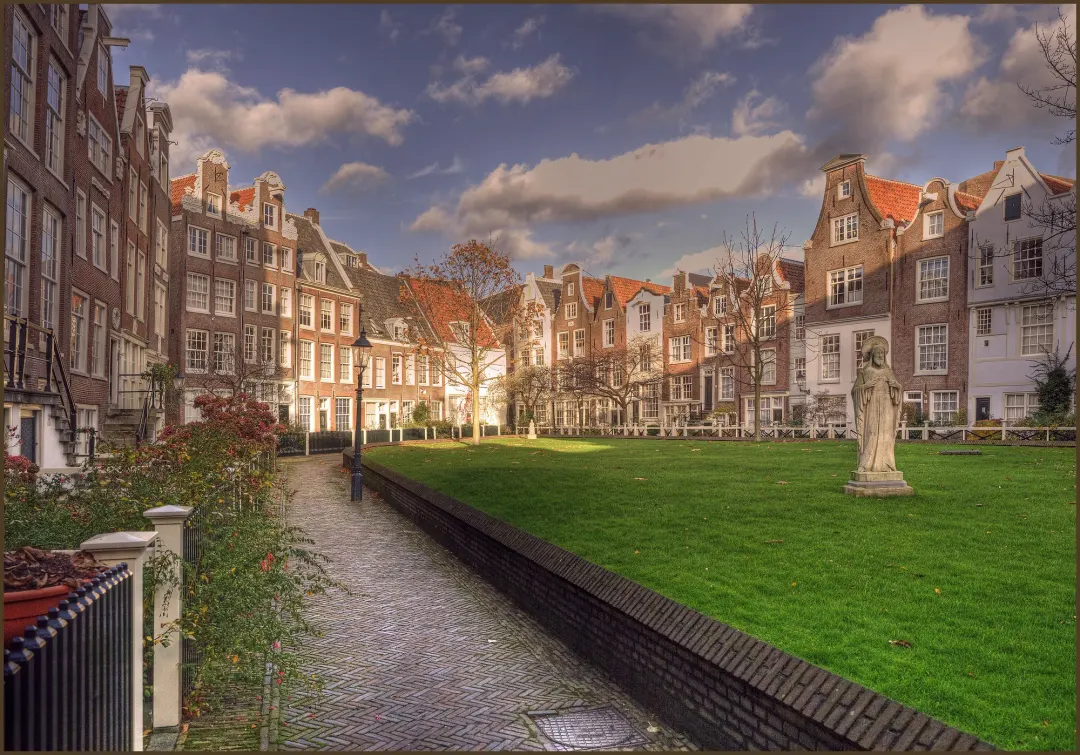
A beguine courtyard has been documented here since 1389, and one of only two surviving timber houses in the centre stands inside it. Its chapel was confiscated at the Reformation, while Catholics built a concealed church opposite in 1671. The courtyard does not admit tour groups, so your guide tells the story at the gate.
De Negen Straatjes
Nine short cross-streets linking the Singel, Herengracht, Keizersgracht and Prinsengracht, several still named for the leather trades that worked here. Today they hold the best small shops in the centre.
The Herengracht and how to read a canal house
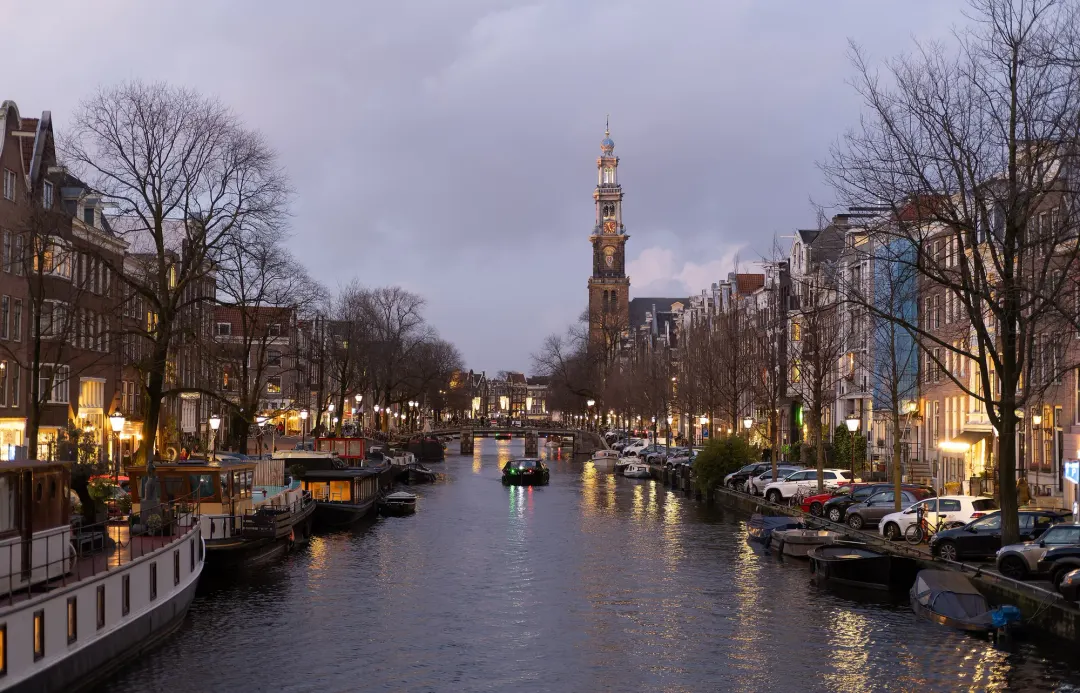
The core of the UNESCO-listed canal ring, and the place where the architecture starts to make sense: plot widths, hoisting beams, the forward lean and the gables that date a house.
The Westerkerk and the Anne Frank House
Hendrick de Keyser's church of 1620 to 1631, its 85-metre tower crowned with the imperial crown of Maximilian of Austria. Rembrandt was buried here as a pauper in 1669 in a rented grave nobody recorded. Anne Frank wrote about hearing these bells from the annexe a few doors along, and about their removal to be melted down in 1943.
Into the Jordaan
Laid out in the same 17th-century expansion but as the workers' quarter, and home to the hofjes: almshouse courtyards hidden behind plain street doors. A quiet ending, in the neighbourhood where you will want lunch.
Highlights
Dam Square, the Royal Palace and the site of the original dam on the Amstel
The UNESCO-listed 17th-century canal ring, explained house by house
The Westerkerk, Rembrandt's burial place, and the Anne Frank House from outside
The Jordaan's hofjes, which most visitors walk straight past
Frequently asked questions
Why is the group limited to fifteen people?
Because the city requires it. Amsterdam caps guided groups in the centre at fifteen participants, and any group of five or more needs a municipal exemption. Amplification is banned, guides must carry and display their exemption, and tours may only run between 08:00 and 22:00. We work well inside those limits.
Will we see the Red Light District?
No, and no lawful tour will. Since April 2020 guided tours have been banned outright in De Wallen, around the Spuistraat and on part of the Ruysdaelkade, and tours past prostitution windows are forbidden anywhere in the city. Your guide can explain the history and the current policy, and point you to the area to walk yourself afterwards.
Can we go inside the Anne Frank House?
Not on this tour. Tickets are sold online only, never at the door, for a specific time slot, and are released weekly for a visit six weeks later. Book that yourself well in advance and we will schedule the walk around your slot. Your guide tells the story properly at the building on the Prinsengracht.
Can we visit the Begijnhof courtyard?
The residents' rules ban organised tour groups, group photography and loud talking, so your guide tells the story at the gate on the Spui. Couples and pairs can then step in quietly on their own afterwards. Please treat it as somebody's front garden, because it is: around a hundred women live there.
How much walking is it, and what is the ground like?
Roughly two and a half to three kilometres over two hours. Amsterdam is flat, but the surface is almost entirely brick paving and cobbles, with humpbacked canal bridges that have a short rise and some steps. Flat, comfortable shoes matter more here than almost anywhere.
What about the bikes?
The bicycles are the real hazard, not the cars. Cyclists are fast, quiet and have right of way in practice, and stepping backwards for a photo onto a bike lane is the most common way visitors get hurt here. Your guide will position the group off the cycle path at every stop.
What is the best time of day?
Morning. Fewer people, better light on the canals, and shops and cafes opening rather than emptying. The difference is largest between April and September. Mid-April to early May and the summer school holidays are the busiest weeks of the year.
More about Amsterdam
What else there is to see, how to get there, and when to come.
You might also like
Private tour of the Rijksmuseum
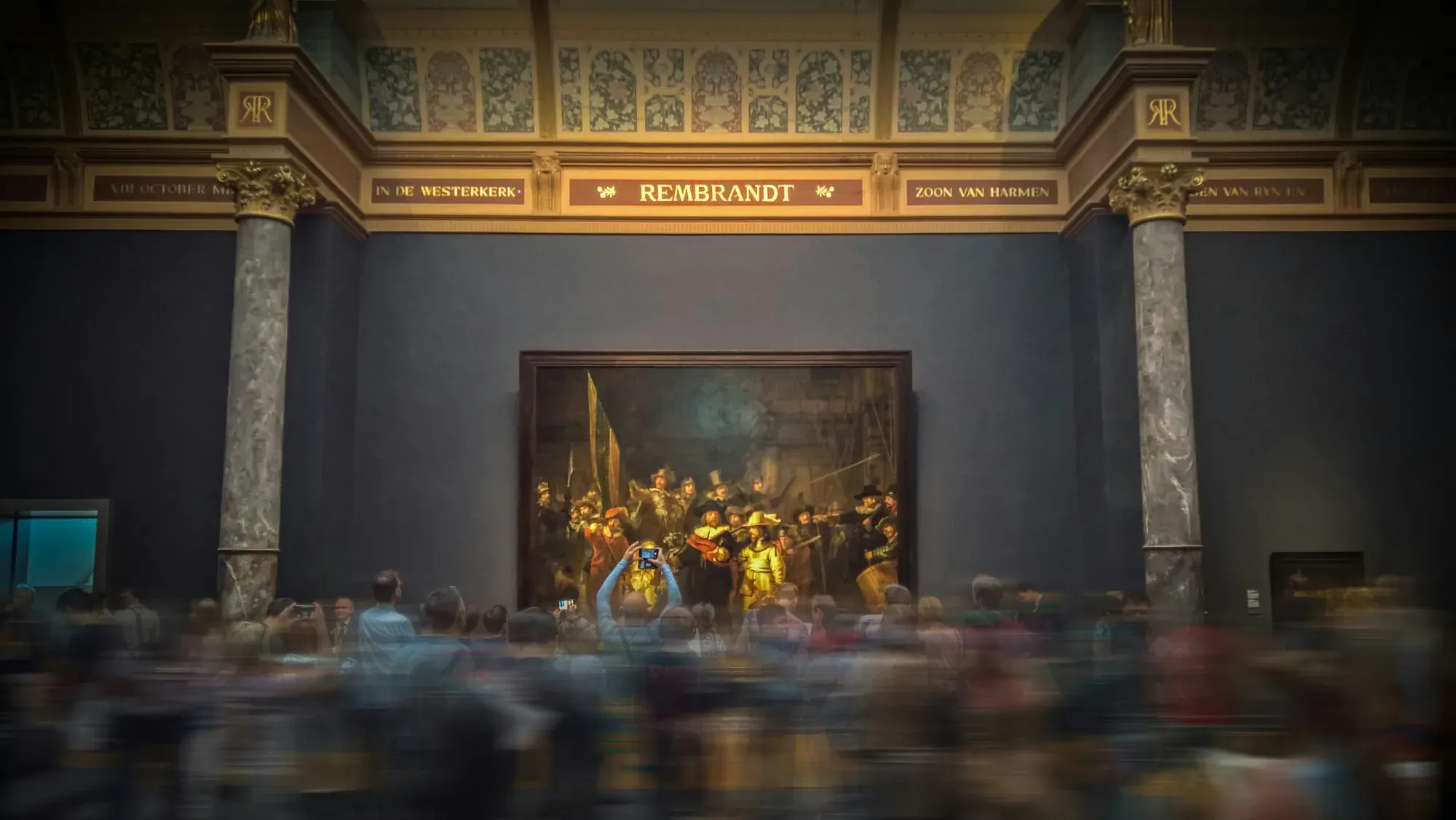
The Rijksmuseum holds eight hundred years of Dutch art across eighty rooms. Most visitors photograph the Night Watch and leave none the wiser.
Knowledgeable private guideFree cancellation up to 24h before
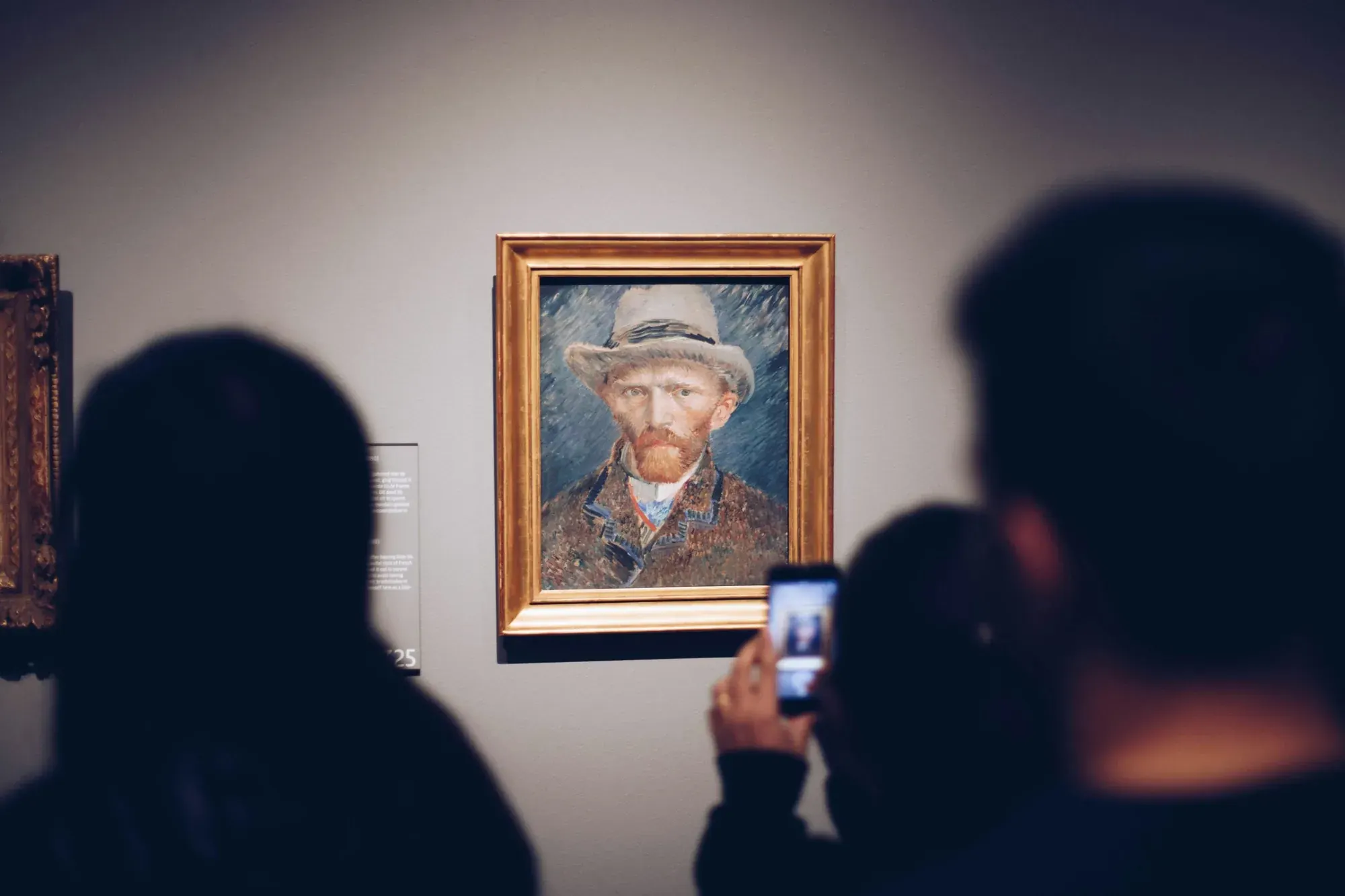
Private tour of the Van Gogh Museum
Van Gogh painted for barely ten years. One hour with your own guide in his museum shows you how he got from The Potato Eaters to Almond Blossom.
Knowledgeable private guideFree cancellation up to 24h before

Self-guided Amsterdam food tour
A 1.5-hour self-guided VoiceMap food tour through Amsterdam, tasting your way through the city's culinary spots.