Breda is where the Dutch story of the House of Orange-Nassau begins: the family held the barony from 1403 and its early ancestors are buried here, while from William of Orange onwards the family has been buried in Delft. The castle, the Grote Kerk, the beguinage and the old harbour all sit within a few hundred metres of each other in a centre twice voted the best in the Netherlands, and unlike Delft or Amsterdam there are no queues anywhere. It is a Brabant city that lives for its own residents first, with a cafe culture and a carnival to match.
Known forOrange-Nassau history, carnival, cafe culture
Time neededTwo hours for the centre
Getting thereDirect intercity, about 25 min from Rotterdam
Brabantine Gothic, begun in 1410 and finished in 1547, with a 97-metre tower whose carillon has played the quarter-hours since 1511. The Prinsenkapel holds some seventeen members of the Nassau-Breda line, including René of Chalon, the first Nassau Prince of Orange, under ceiling frescoes painted in 1533 by Tommaso Vincidor, a pupil of Raphael.
Free to enter, normally Monday to Saturday 10:00 to 17:00 and Sunday from 13:00, but it is a working event venue that closes for concerts. Check the calendar the day before.
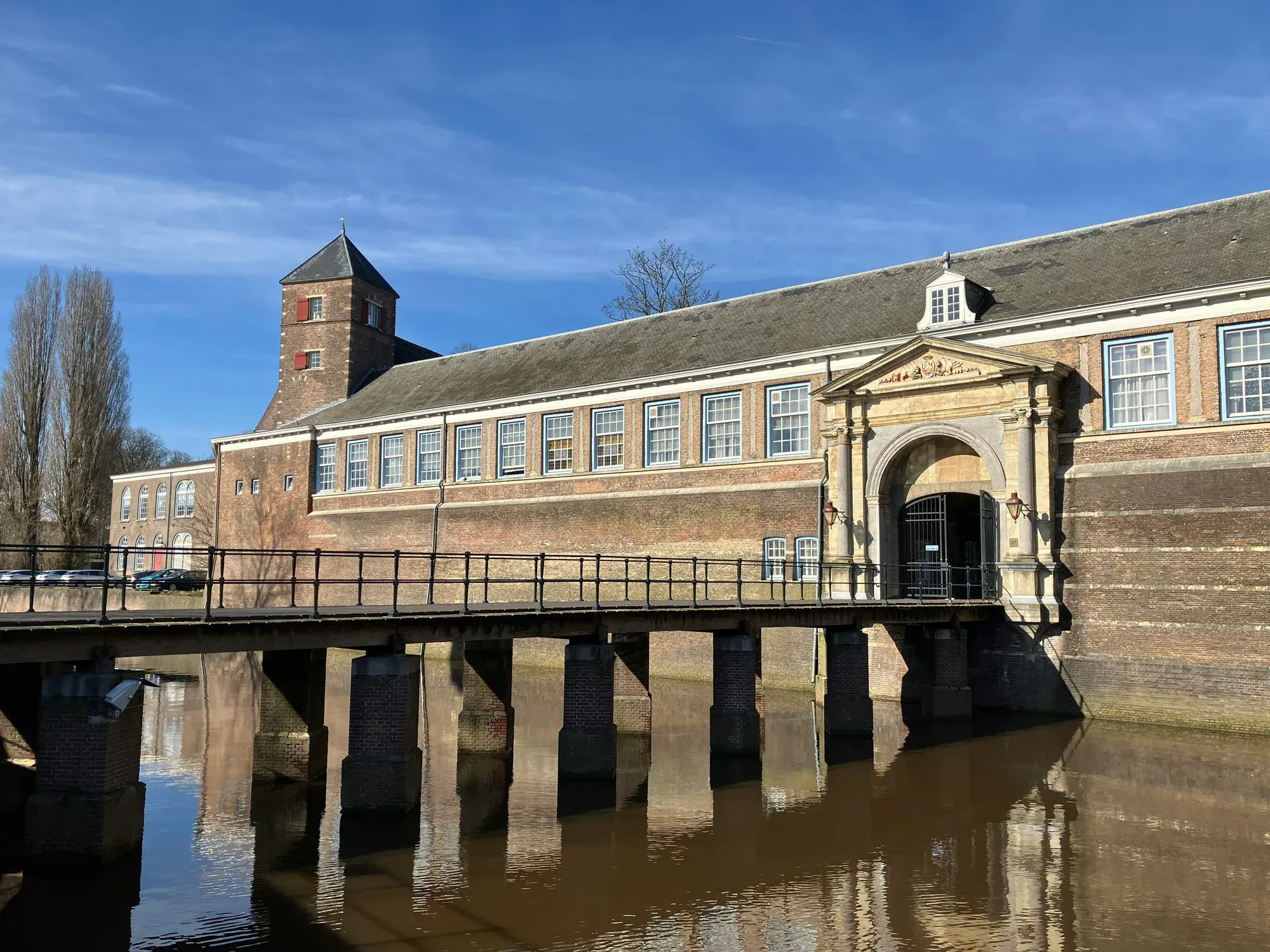
A late 12th-century fortress at the meeting of the Mark and the Aa, rebuilt as a Renaissance palace in the 1530s by the Italian architect Tommaso Vincidor of Bologna for Hendrik III van Nassau. Since 1828 it has housed the Koninklijke Militaire Academie, the Dutch officer academy.
Normally closed to visitors because it is a working military campus. Occasional guided tours run on Saturdays and must be booked ahead, with ID required for everyone aged 13 and over.
Founded in 1267 beside the castle and moved to Catharinastraat in 1534 when Hendrik III wanted the land for his garden. Beguines were unmarried religious women who took no permanent vows and earned their own living. The last of them, Sister Frijters, died in 1990.
Still lived in, so visit quietly and briefly. The herb garden holds more than three hundred species.
In March 1590 Prince Maurits hid around seventy soldiers under the turf in a peat barge. The barge sprang a leak and the men stood for days in freezing water in the dark, but the Spanish garrison, distracted by carnival, let it through. The soldiers opened the gates and Breda was Dutch again. The Dutch call it their Trojan horse.
The water gate carries the name but the barge did not actually sail through it. Worth knowing before someone corrects you.
The commercial heart, ringed with terraces and still a working market square. The Havermarkt, tucked at the foot of the church tower, is the traditional nightlife square, and despite the name grain was never traded there.
General market Tuesday and Friday mornings, art and curiosities on Wednesday. Market mornings give a livelier square and a more crowded one.
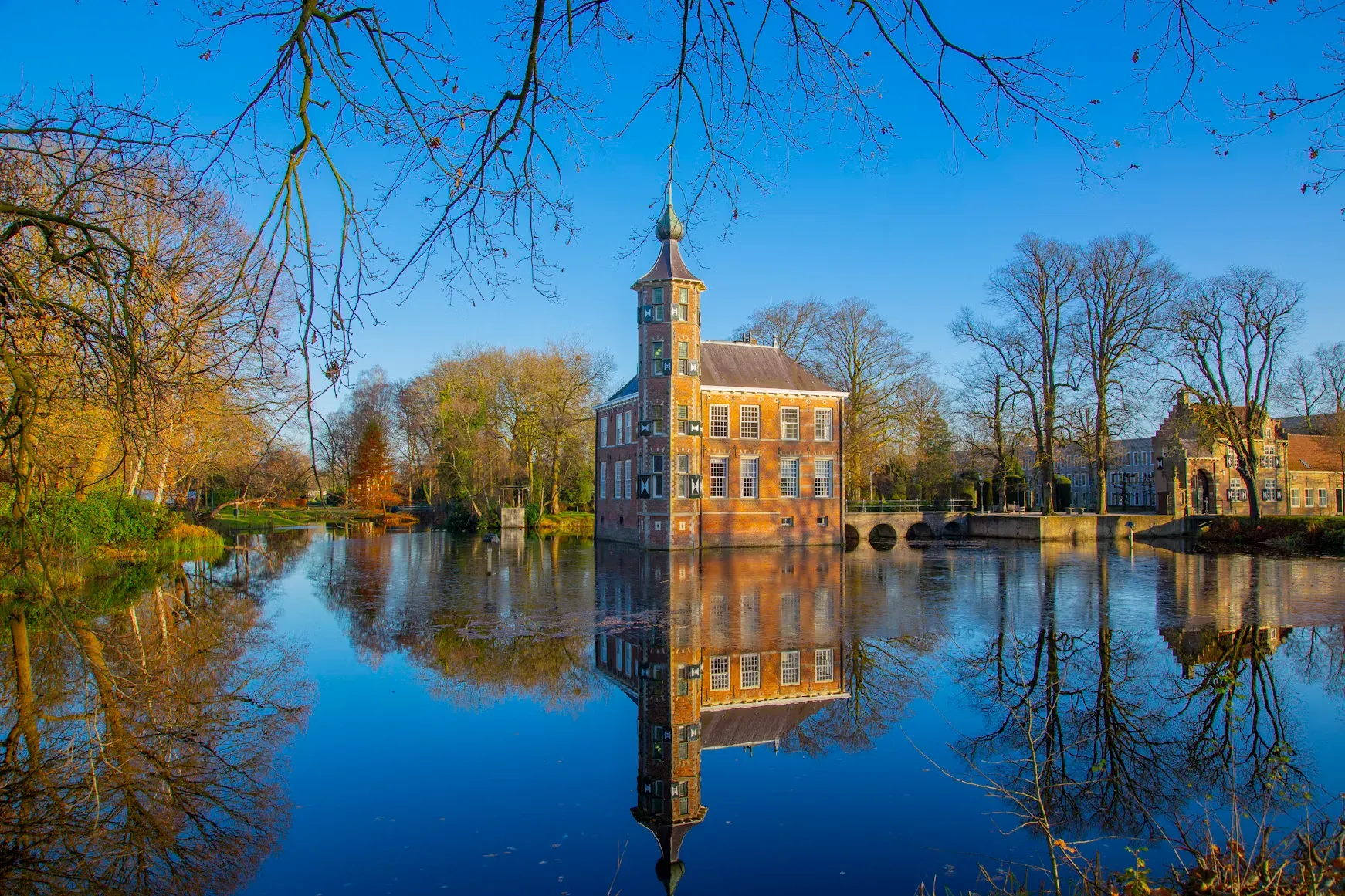
A small moated castle with an onion-domed tower on the southern edge of the city, beside the Mastbos woods. It is the photogenic one, quite separate from the Nassau castle in the centre, and its formal gardens are open to the public.
Outside the historic centre, so it is a short ride or a walk through the Mastbos rather than part of a city walking tour. The gardens are the reason to go.
Nearly 150 murals spread across the city, telling stories from Breda's own history on the blind end walls of ordinary buildings. It is the one thing here that is completely contemporary, and a good counterweight to all the Nassau history.
Free and outdoors, so it works in any weather and at any hour.
Getting thereBreda Centraal is a main intercity junction with direct trains from Rotterdam in about 25 minutes, Amsterdam in about an hour, and Antwerp and Brussels on the high-speed line. The historic centre is a ten-minute walk from the station, straight down Willemstraat past Valkenberg park.
Getting aroundEntirely on foot. The whole historic centre fits inside roughly one square kilometre, and the castle, the Grote Kerk, the beguinage and the harbour are all within a few hundred metres of each other. It is flat.
Best time to visitMorning for the church and the beguinage, when both are quiet and the light in the Prinsenkapel is better. Late afternoon if you want to finish on a terrace, which is the right way to end a day in Brabant.
Time neededTwo hours covers the centre properly. Half a day if you add the Blind Walls murals or a long lunch.
Tickets & passesThe Grote Kerk is free. Castle tours and tower climbs are run separately by a local guild and must be booked in advance.
From our guides
Worth knowing before you go
Breda renames itself Kielegat for the four days before Ash Wednesday and the whole centre becomes a costumed street party. Extraordinary to see, and not a week for a history walk.
A mummified cat was found walled up in the Grote Kerk in 1906, apparently as a building offering some six hundred years ago. She is called Polleke and has been back on display since 2025. Children love her.
Be realistic about what Breda is not. There is no world-famous museum and no single iconic canal view. What it has is royal history of the first rank, a centre you can learn in two hours, and no crowds.
Gallery
Breda in pictures
Plan your visit
Useful links
Official sources, so you can check today's hours and prices rather than trusting ours. All open in a new tab.
Coaches set down close to the centre and park outside it. Confirm the current arrangement with the city before travelling, as drop-off points change during carnival and the October liberation commemorations.
Not normally. The Kasteel van Breda is the working campus of the Royal Military Academy and is closed to casual visitors. A local guild runs occasional Saturday tours that must be booked ahead, with ID required for everyone aged 13 and over. From the outside, the best views are from Kasteelplein and from the Valkenberg park side.
Why does a Brabant city matter to the Dutch royal family?
Because it is where they come from. The family held the barony of Breda from 1403, when Johanna van Polanen married Engelbrecht van Nassau, and seventeen of their ancestors lie in the Prinsenkapel of the Grote Kerk. Only Delft, where the family has been buried since William of Orange, has a comparable royal claim.
Is Breda worth it if we have already seen Amsterdam and Delft?
Yes, but for different reasons, and it is fair to say so plainly. Breda has no world-famous museum and no postcard canal. It has first-rank royal history, a compact and handsome centre, nearly 150 street murals, and the complete absence of queues.
How hard is the walking?
Easy. Breda is flat and the whole route is under two kilometres. The centre is brick paving and cobbled squares, and Kerkplein and the Grote Markt are properly uneven underfoot, so wear flat shoes.
When is it busy?
Rarely, which is the point. The exceptions are market mornings on Tuesday and Friday, warm afternoons when the terraces fill with locals rather than tourists, and carnival, when the centre is given over entirely to the party.
Help us make this site better. Cookies show us which pages confuse people, so we can fix them, and which of our ads lead to bookings. With your yes, we can also show you our tours later on Facebook and Instagram. We never sell your data, and you can change your choice any time. Privacy policy Cookies help us fix pages and run our ads, also on Facebook.
Your cookie choices
Cookies are small files a website leaves in your browser so it can recognise it later. We use them for four things and nothing else: keeping the booking process working, seeing where visitors get stuck so we can fix those pages, knowing which of our ads led to a booking, and, if you allow it, showing you our tours again on Facebook and Instagram. We never sell your data.
Strictly necessary
Always on
Keeps your booking and payment session with our checkout provider Mollie alive, protects the forms against abuse, and remembers the choice you make here for six months. No tracking, no profiling, and nothing is shared for marketing. The site cannot work without these, so they cannot be switched off.
Microsoft Clarity and PostHog show us which pages people leave, where they hesitate, and what they never find. On: they can recognise your browser across pages and repeat visits, and record a replay of your visit with anything you type hidden. That means cookies: Clarity’s _clck (1 year) and _clsk (1 day), and PostHog’s own cookie (1 year). Off: no cookies, and nothing stored on your device. Both still count the pages you view, and PostHog ties the pages of a single visit together using a code built from your IP address and browser that is renewed every day and cannot be turned back into either. So we can see that one visit read three pages, and we cannot recognise you tomorrow. Clarity does still replay how each single page is used, with anything you type hidden, but it cannot link one page to the next. No profile, and no linking one day to the next.
Run for us by Microsoft Ireland Operations Ltd and PostHog Inc. Neither is allowed to sell this data or use it for advertising.
If you reached us through one of our Google ads, Google’s tag notes whether that visit ended in a booking, so we only keep paying for ads that work. On: Google sets the cookie _gcl_au (90 days) on this site, plus _gcl_aw (90 days) when you arrive from an ad, and receives the booking amount and its reference. Off: Google’s tag is not loaded at all. Meta’s pixel tells Meta which pages of this site you visited and whether you booked, so we can measure our Facebook and Instagram ads and show you our tours there again (retargeting). On: Meta sets the cookie _fbp (90 days), plus _fbc (90 days) when you arrive from one of our Meta ads. Off: Meta’s pixel is not loaded at all. Google’s tag is never used for retargeting.
Provided by Google Ireland Ltd and Meta Platforms Ireland Ltd, which each handle this data under their own advertising terms and privacy policy.
Whatever you pick, you can change it later from the privacy policy, and changing it to off deletes the cookies again.