
The Orange City
Breda is the cradle of the Dutch royal family and almost nobody outside the Netherlands knows it. In 1403 Johanna van Polanen married Engelbrecht van Nassau and brought the castle and the barony with her, and from that marriage runs a line that ends at the present king.
This private walking tour covers the whole of that story in a compact centre twice voted the best in the Netherlands. You see the castle that Hendrik III rebuilt as a Renaissance palace in the 1530s and that has housed the Royal Military Academy since 1828, the Prinsenkapel where seventeen of the Nassau line are buried under frescoes by a pupil of Raphael, and the beguinage founded in 1267 whose last resident died in 1990.
We are also honest about what Breda is not. There is no world-famous museum here and no single postcard canal. What there is, is first-rank royal history, a handsome centre you can genuinely learn in ninety minutes, one of the best stories in Dutch military history, and the complete absence of crowds.
What you'll see on this tour
What people say about us
“Elena was an excellent guide! She made the tour very enjoyable and her explanations about the paintings were extraordinary!”
“Excelente guía Elena ! Nos hizo el tour muy ameno y sus explicaciones sobre las pinturas fueron extraordinarias!”
Translated from Spanish
 Google · July 2026
“A very good and cheerful guide. Historically knowledgeable yet entertaining. And he managed to adapt to the leisurely walking pace of my guests.”
“Ein sehr guter und fröhlicher Guide. Historisch fundiert und trotzdem unterhaltsam. Und es ist ihm gelungen, sich an das gemütliche Lauftempo meiner Gäste anzupassen.”
Translated from German
Google · April 2026“Had a fantastic tour with Joceyln who was fantastic, personable and knowledgeable”
Google · April 2026What's included
Included
- Private guide
- 1.5-hour private walking tour
Not included
- Food and drinks
- Museum and attraction entrance tickets
- Gratuities for the guide (optional)
- Pick-up and drop-off in another city (can be added to your booking at check-out)
What to expect
Kasteelplein and the castle gate
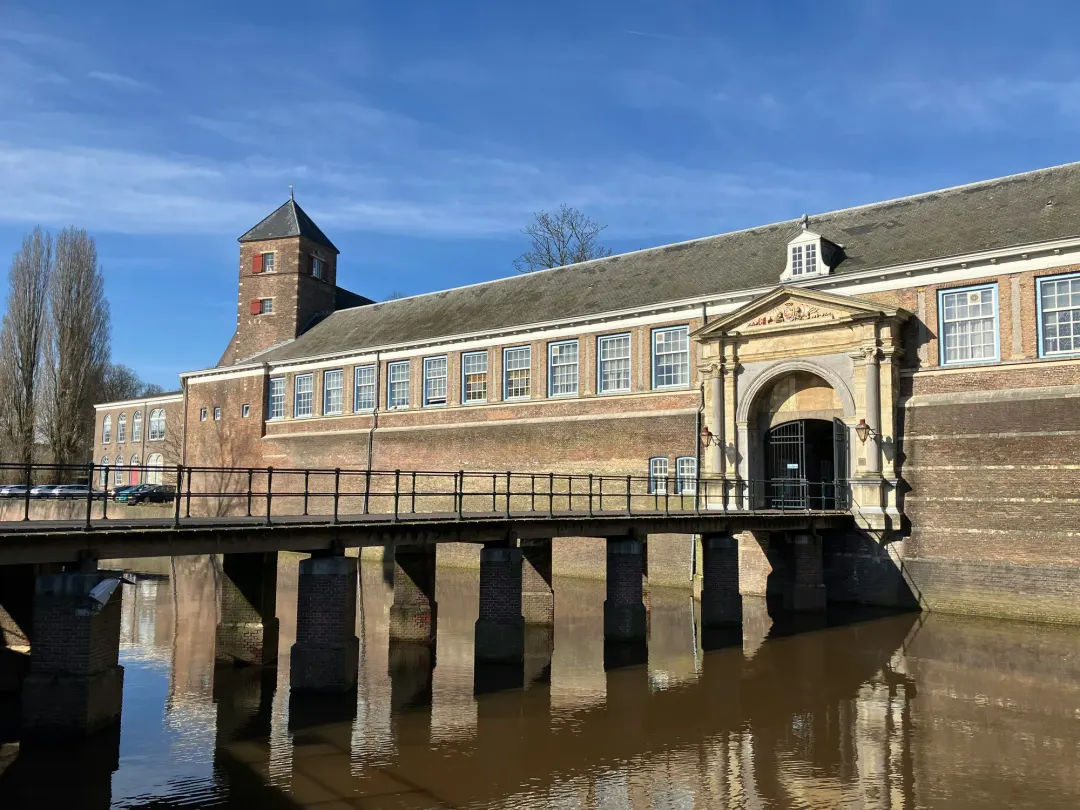
The fortress at the meeting of the Mark and the Aa dates from the late 12th century. Jan van Polanen bought Breda in 1350 and rebuilt it, and in 1403 his granddaughter's marriage made it a Nassau town. Today it is the Royal Military Academy, so your guide tells the story from the square.
Meeting point: On Kasteelplein, in front of the gate of the Castle of Breda. You can also choose a custom starting location. Just add it as a comment when you book.
Valkenberg park
The castle's own garden and hunting ground before it became the city park. It is also where the Polish connection surfaces: Breda was liberated on 29 October 1944 by General Maczek's 1st Polish Armoured Division, and many of those men could not go home afterwards and settled here.
The Begijnhof
Founded in 1267 beside the castle and moved here in the 1530s when Hendrik III wanted the land for his garden. Beguines took no permanent vows and earned their own living. The courtyard, its herb garden and St Catherine's church are still here, and still lived in.
Catharinastraat and the Willem Merkxtuin
The finest street of old Breda, lined with the town houses of the families who served the Nassau court, and a walled sculpture garden that gives you the back view of them. A quiet stop before the noise of the square.
The Grote Markt and the town hall
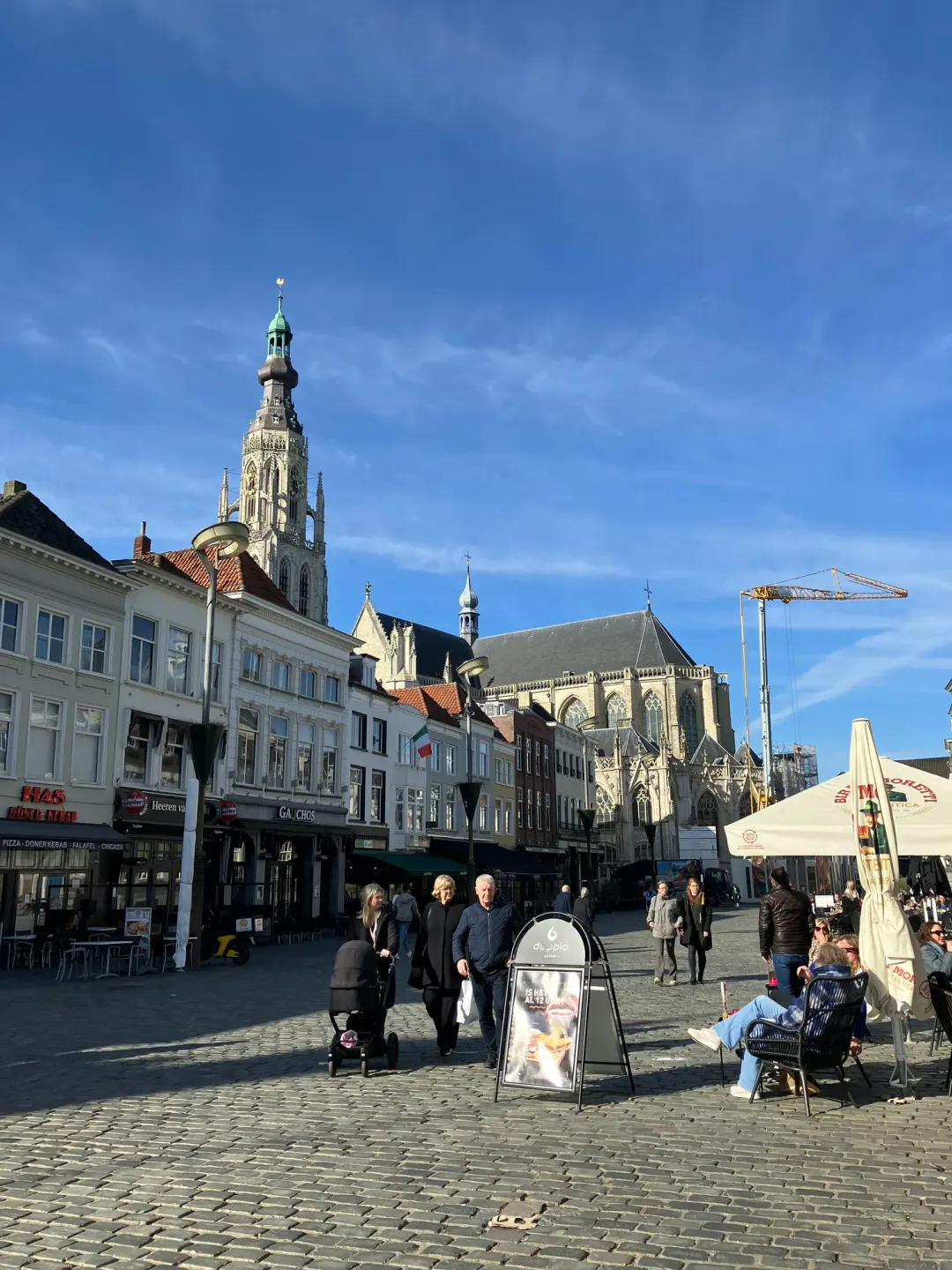
The commercial heart, still a working market square and ringed with terraces. The place to explain Brabant cafe culture, and why a city of this size has twice been voted the best centre in the country.
The Grote Kerk and the Prinsenkapel
Brabantine Gothic, begun in 1410 and finished in 1547, with a 97-metre tower whose carillon has rung the quarter-hours since 1511. Inside, the Prinsenkapel holds some seventeen of the Nassau-Breda line, including René of Chalon, the first Nassau Prince of Orange, under ceiling frescoes painted in 1533.
The Havermarkt, the harbour and the Spanjaardsgat
Down past the nightlife square to the old harbour and the water gate between the Granaattoren and the Duiventoren. This is where your guide tells the story of the peat barge of 1590, which is the best story Breda has.
Highlights
The Castle of Breda, Nassau family seat since 1403, now the Royal Military Academy
The Prinsenkapel, burial place of the ancestors of the Dutch royal family
The beguinage of 1267, its herb garden and its last beguine
The Spanjaardsgat and the peat barge that took Breda back from the Spanish
Frequently asked questions
Can we go inside the castle?
No, and we say so up front. The Kasteel van Breda is the working campus of the Royal Military Academy and is normally closed to visitors. A local guild runs occasional Saturday tours that must be booked well ahead, with ID required for everyone aged 13 and over. Our walk explains the castle from Kasteelplein and from the Valkenberg side, which is also where the best view of it is.
What is worth going inside on this tour?
The Grote Kerk, and it is free. It is a working event venue that closes for concerts and functions, so we check the calendar before every tour. The beguinage courtyard is open daily and worth ten quiet minutes. Everything else on the route is exterior.
How hard is the walking?
Easy. Breda is flat and the whole route is under two kilometres. The centre is brick paving and cobbled squares, and Kerkplein and the Grote Markt are properly uneven, so wear flat shoes.
How busy does it get?
Compared with Amsterdam or Delft, barely at all, and that is Breda's main advantage. The exceptions are market mornings on Tuesday and Friday, and the terraces on any warm afternoon, when the square fills with locals rather than tourists.
Is there a time of year to avoid?
Carnival. For the four days before Ash Wednesday, Breda renames itself Kielegat and the entire centre becomes a costumed street party. It is extraordinary and it is not a week for a history walk. At the end of October the city marks its liberation, which is a serious and moving part of its year.
Why does a Brabant city matter to the Dutch royal family?
Because it is where they come from. The family held the barony from 1403 and seventeen of their ancestors lie in the Prinsenkapel. Only Delft, where the family has been buried since William of Orange, has a comparable royal claim.
Is Breda worth it if we have already seen Amsterdam and Delft?
Yes, but for different reasons. Breda has no world-famous museum and no iconic canal view. It has royal history of the first rank, a centre you can learn properly in ninety minutes, nearly 150 street murals in the Blind Walls Gallery, and no queues anywhere.
More about Breda
What else there is to see, how to get there, and when to come.
You might also like

Self-guided Amsterdam food tour
A 1.5-hour self-guided VoiceMap food tour through Amsterdam, tasting your way through the city's culinary spots.
Self-guided audio tour of Alkmaar
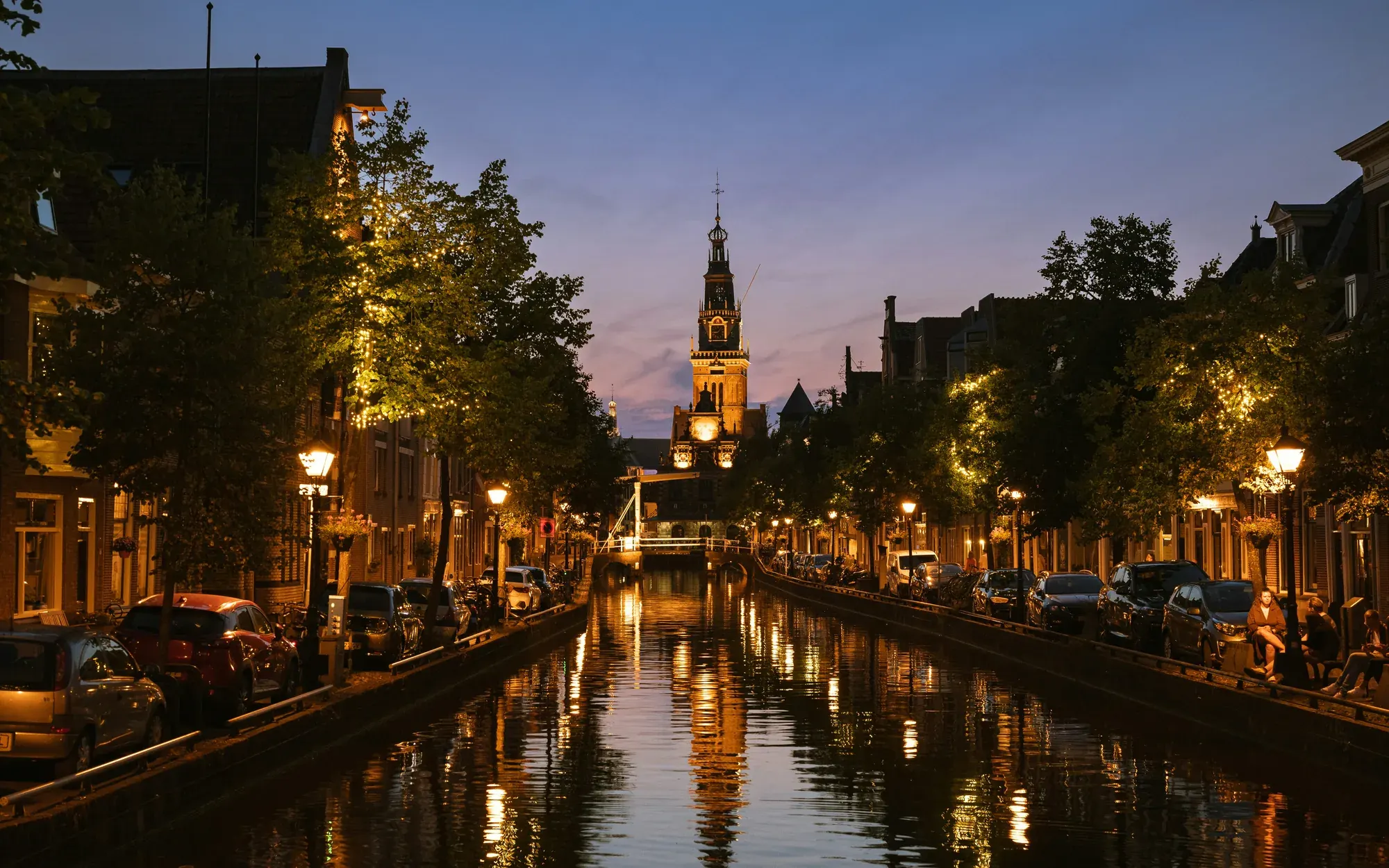
A 1-hour self-guided VoiceMap walking tour of Alkmaar, from the weigh house through the story of the 1573 siege.
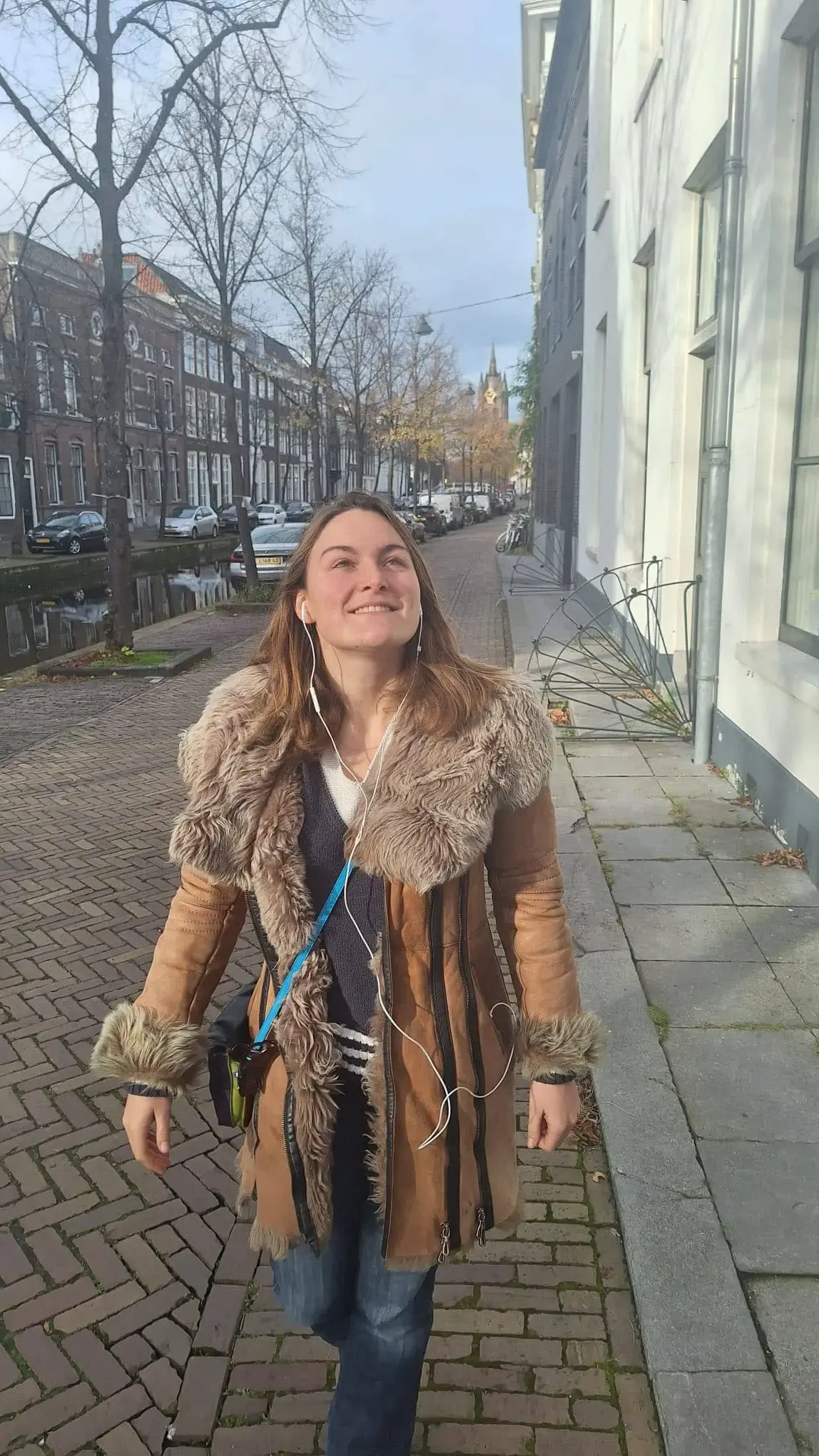
Self-guided audio tour of Delft
A 2-hour self-guided VoiceMap walking tour through Delft, a historical oasis largely untouched by modernity.