Kinderdijk or Zaanse Schans? Which windmills to visit in the Netherlands
September 6, 2026 · by Robin Lenskens
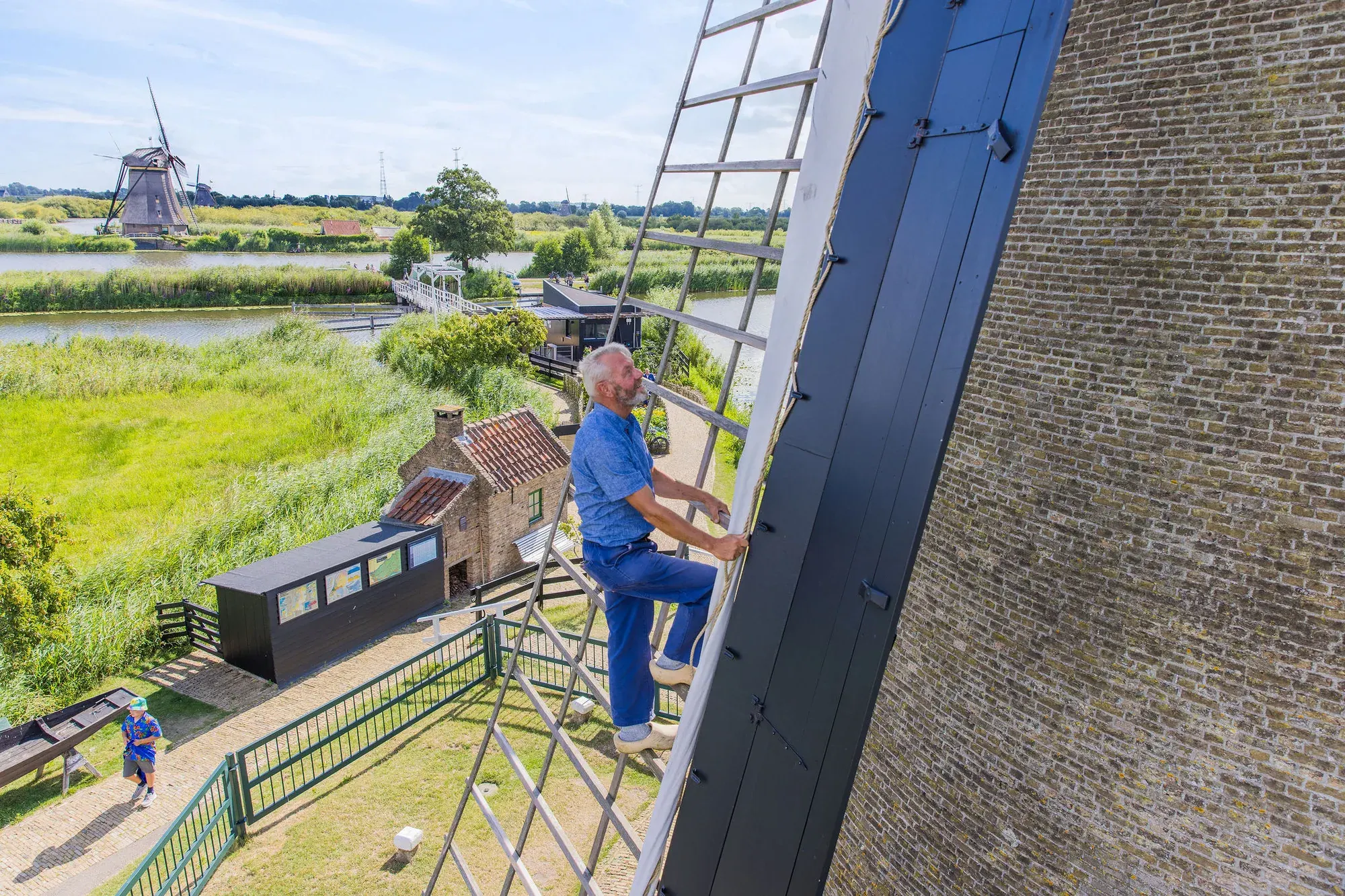
If you want to see windmills in a real working landscape, go to Kinderdijk. If you want a quick, easy half day from Amsterdam with mills you can go inside, shops and a cheese demonstration, go to the Zaanse Schans. Kinderdijk is a UNESCO World Heritage site of 19 eighteenth-century drainage mills standing in a polder south-east of Rotterdam; the Zaanse Schans is a museum village of historic houses and industrial mills on the river Zaan, 24 minutes by bus from Amsterdam Centraal. They are not the same kind of place, and the right choice depends on where you are staying, how much time you have and what you want the day to feel like.
What is Kinderdijk?
A drainage landscape, not a village. The 19 mills were built to pump water out of the Alblasserwaard polder into the river, and they stand in two rows along the canals where they were put in the 1700s (the two museum mills date from 1738 and 1630). UNESCO listed the site in 1997 as an outstanding example of Dutch water management, together with the pumping stations and sluices that do the job today. Millers still live in most of the mills.
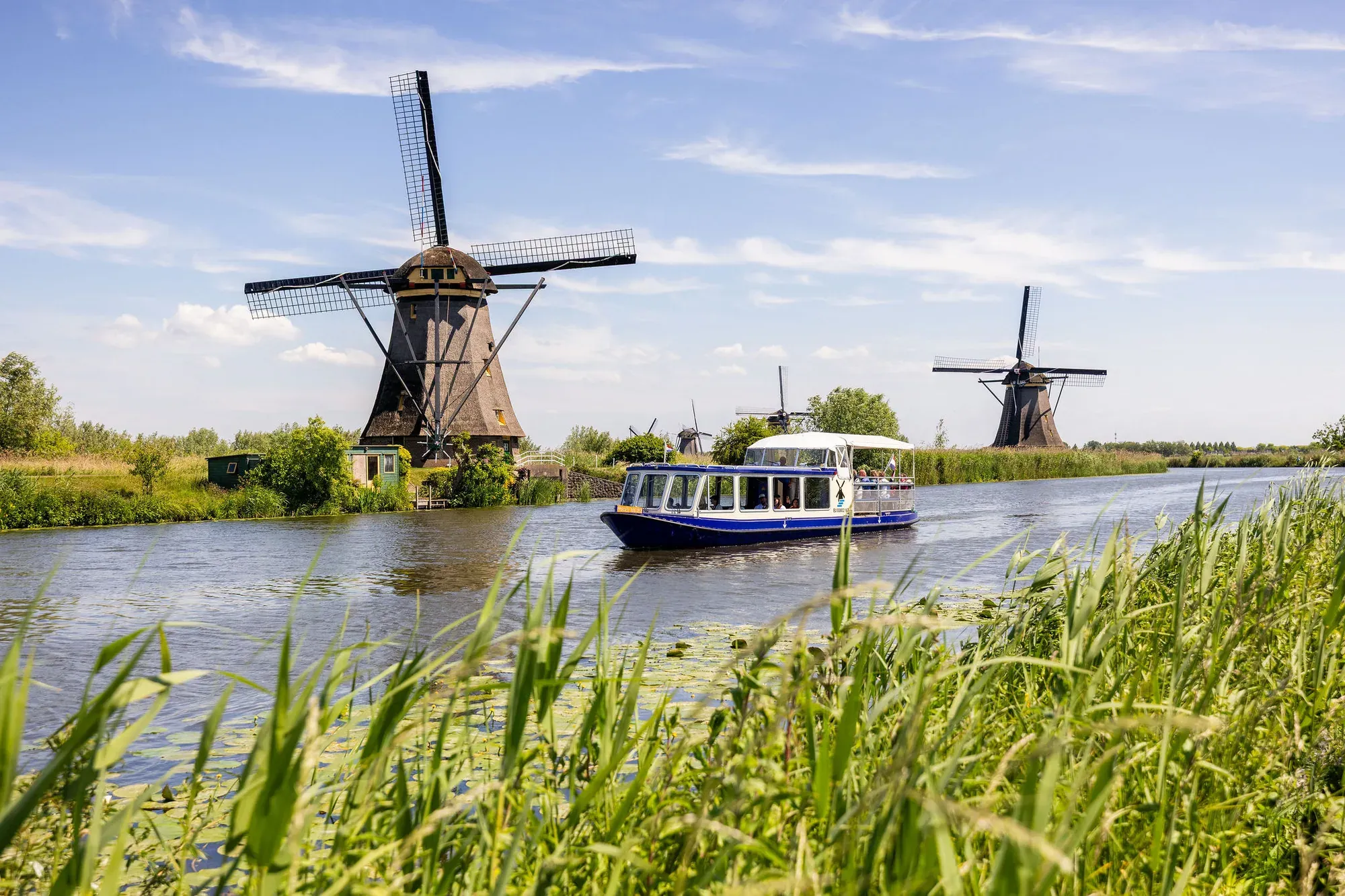
What you see is a wide, flat, open landscape with water, reeds and the mills in a line, and very little else: a visitor centre, a café, two museum mills you can go into, a pumping station and small tour boats. The public path along the mills is free all year round; the ticket (around €21.00 for adults at the time of writing, less for children aged 4 to 12, sold at a discount on kinderdijk.com) buys you the museum mills, the pumping station, the film and the boats. Opening hours in the main season (6 March to 1 November in 2026) are 09:00 to 17:30 daily, shorter in winter, and parking at the entrance costs €9.75.
What is the Zaanse Schans?
An open-air heritage area. In the twentieth century, historic wooden houses, warehouses and windmills from around the Zaan region were moved to one riverbank at Zaandam and arranged as a village, so that the industrial past of the area (this was one of the first industrial regions in Europe, with hundreds of windmills sawing wood, grinding spices and pressing oil) could be shown in one place. The result is a compact, pretty and very busy site with working mills, craft workshops, a clog-making demonstration, a cheese shop with tastings, a bakery museum, a chocolate factory experience and several museums.
The village itself is free to walk through, with no compulsory entrance fee. Individual mills and museums charge their own admission, or you buy the combined Ticket Zaanse Schans at €29.50 for adults and €20.00 for children aged 4 to 17, which covers the Zaans Museum and Verkade Experience, the Windmill Museum, the Weavers’ House, the Museum Zaanse Tijd, the heritage rooms on the Kalverringdijk, two working mills of your choice among those open that day, a digital audio tour and a 10 per cent discount at Restaurant De Kraai. Most attractions open from 09:00 to 17:00 and the car park (€15 per visit for cars, €55 for coaches) is open 08:00 to 19:00. Details are on the Zaanse Schans site.
How far are they from Amsterdam, Rotterdam and The Hague?
This is usually the deciding factor.
| Kinderdijk | Zaanse Schans | |
|---|---|---|
| From Amsterdam | Train to Rotterdam Centraal, then boat or bus; roughly 3 hours each way | Bus 800 from Amsterdam Centraal, about 24 minutes, every 15 minutes 09:00 to 17:00; or train to Zaandijk Zaanse Schans (about 17 minutes) plus a 15-minute walk |
| From Rotterdam | WaterShuttle from the Willemskade in about 30 minutes; bus 489 from Kralingse Zoom in about 35 minutes | Train to Amsterdam and onward; count on 1.5 to 2 hours each way |
| From The Hague | Train to Rotterdam Centraal, then as above; around 2 hours each way | Train via Amsterdam; around 1.5 to 2 hours each way |
In short: from Amsterdam the Zaanse Schans is a half-day trip and Kinderdijk is a full day; from Rotterdam, The Hague or Delft it is the other way round. The full transport detail for Kinderdijk is in our post on reaching Kinderdijk without a car. For Zaanse Schans, check the NS journey planner or 9292.nl for the train and bus 800.
Which is more crowded?
The Zaanse Schans, by a wide margin. It is one of the most visited places in the country because it is so close to Amsterdam, and coaches arrive all day. The site publishes a busy-times calendar on its own website, which is worth a look: weekends and the summer months are marked as very busy, and the paths between the mills and the shops are narrow. Get there at 09:00 when the mills and workshops open, or after 15:30 when the coaches leave, and it is a different place.
Kinderdijk is busy too between about 10:30 and 14:00, mostly with coach and cruise groups walking the first few hundred metres of the path, but the site is large and open. Walk past the second mill and the crowd thins out; take the boat to the far end and you can have the landscape almost to yourself. Early morning and late afternoon are the quiet times at both, and late afternoon has the better light.
Which is better for cruise passengers in Rotterdam?
Kinderdijk, without question. From the cruise terminal on the Wilhelminakade it is a short hop across the river to the WaterShuttle pier, or a metro and bus ride, and the whole visit fits inside a port call with time left for Delft or Rotterdam itself. The Zaanse Schans is on the far side of Amsterdam, which makes it a long and risky day from a ship in Rotterdam. Our Delft and Kinderdijk shore excursion is built around this: the mills in the morning or afternoon, Delft in the other half, and back at the terminal with margin.
For cruise passengers docked in Amsterdam, the logic flips and the Zaanse Schans is the sensible choice.
Which is better for families?
For most families with children under about ten, the Zaanse Schans. There is more to do at close range: watching clogs being carved, tasting cheese, going inside a working sawmill or oil mill, the chocolate and biscuit experiences, and everything is within a few hundred metres. Note that wheelchair and pushchair access is limited on the historic paths and bridges, though the Jonge Schaap sawmill is fully accessible.
Kinderdijk works well for families who like being outdoors: the boat trips are included in the ticket, the museum mills show how a miller’s family lived in a few small rooms, the path is flat and good for scooters and bikes, and there is space to run. It is less good on a wet or windy day, when the boats stay ashore and there is nowhere much to shelter. Kinderdijk has its own page for visiting with children.
Which is better for photography?
Kinderdijk. The row of mills along the water, reflections in the canals, wide skies, and no shops, cars or coaches in the frame. Sunrise and the hour before sunset are the times; the public path is open then even though the visitor centre is not. In early September the mills are floodlit for a week, with evening boat trips.
The Zaanse Schans photographs well too, especially the line of mills along the river seen from the Zaan bridge or from the far bank, but it is hard to get a frame without people in it between 10:00 and 15:30, and the green wooden houses are more picturesque than the mills themselves.
Other windmills worth knowing about
If you are already in a city and only want to see one mill up close, you may not need either trip.
Schiedam, next to Rotterdam, has the tallest traditional windmills in the world, built to grind grain for the town’s jenever (Dutch gin) distilleries, and one of them is a museum mill. It is a short train or metro ride from Rotterdam Centraal.
Leiden has Molen de Valk, a tall tower mill a few minutes’ walk from Leiden Centraal, run as a museum with the miller’s rooms and machinery intact. It fits into a Leiden day without any planning.
Haarlem has Molen De Adriaan on the Spaarne, and Amsterdam has a handful of surviving mills, including De Gooyer next to a brewery. None of these gives you the landscape of Kinderdijk or the village of the Zaanse Schans, but each gives you a working mill and a guided look inside, which for many visitors is enough.
Verdict by traveller type
- Staying in Amsterdam, two or three days, no car: Zaanse Schans. Half a day by bus 800, and you keep the rest of the day.
- Staying in Rotterdam, The Hague or Delft: Kinderdijk. Thirty minutes by boat from Rotterdam and a far better landscape.
- Cruise passenger in Rotterdam: Kinderdijk, combined with Delft.
- Cruise passenger in Amsterdam: Zaanse Schans.
- Photographer or anyone who values quiet: Kinderdijk, early or late in the day.
- Family with young children: Zaanse Schans for variety; Kinderdijk if they like boats, bikes and open space.
- Interested in Dutch engineering and water management: Kinderdijk, and take the boat and the pumping station seriously.
- Interested in Dutch industry, trade and crafts: Zaanse Schans, with the Zaans Museum.
- A week or more in the country: both. They do not overlap, and seeing a working polder and a reconstructed industrial village tells you two different things about how the Netherlands was built.
Frequently asked questions
Is Zaanse Schans free?
Walking around the village is free. You pay for the individual windmills and museums you go into, or for the combined Ticket Zaanse Schans (€29.50 adults, €20.00 for ages 4 to 17), which covers the main museums and two mills. Parking costs €15 per visit, so arriving by bus 800 or by train to Zaandijk Zaanse Schans is cheaper as well as easier.
Is Kinderdijk free?
The public path along the 19 mills is free every day of the year. The ticket, around €21.00 for adults at the time of writing, covers the visitor centre film, the two museum mills, the Wisboom pumping station and the tour boats. If you only want to walk and photograph, you can do that without paying.
Can I visit both Kinderdijk and Zaanse Schans in one day?
Only with a car and a very early start, and we would not recommend it. They are on opposite sides of the Randstad, and both are best early or late, which a two-site day makes impossible. Give each its own half day on different days, or choose the one closest to where you are staying.
Which has more windmills?
Kinderdijk has 19 historic drainage mills in one landscape. The Zaanse Schans has a smaller number of mills, but they are of different types (sawmills, oil mills, a spice mill, a paint mill) and several are open to go inside as working mills, which is not the case at Kinderdijk.
Do the windmills actually turn?
At the Zaanse Schans, the working mills usually turn on the days they are open, because they are running as mills for visitors. At Kinderdijk the mills turn when the millers set them going, mainly at weekends and on busy days with enough wind, and always on National Windmill Day, the second weekend of May.
Is Kinderdijk worth it from Amsterdam?
If windmills are a main reason for your trip, or you are also spending time in Rotterdam, yes. If you have two days in Amsterdam and want a taste of Dutch countryside, the Zaanse Schans gives you that in a quarter of the travel time. Read our post on reaching Kinderdijk without a car before deciding.
How we can help
Both sites have a self-guided audio tour from our team, written by local guides, including the Zaanse Schans audio tour. Our destination pages for Kinderdijk and the Zaanse Schans have the practical details for each. For a private guided day that pairs either site with a city, our guides work in six languages and start where you are staying; tell us your dates on the plan my trip page.