
The Gouda cheese market and cheese farms: when to go and what to expect
· by Robin Lenskens · Updated
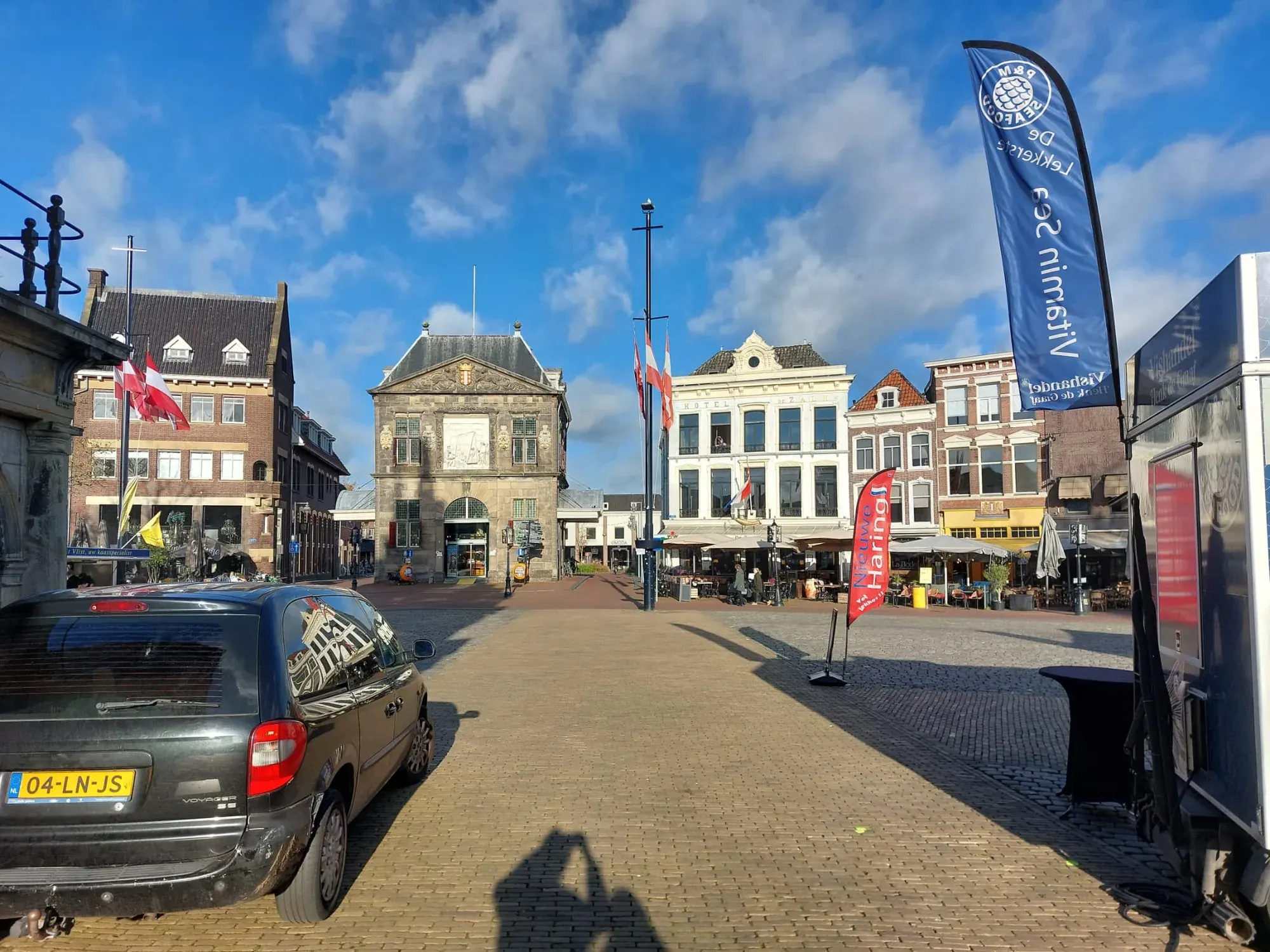
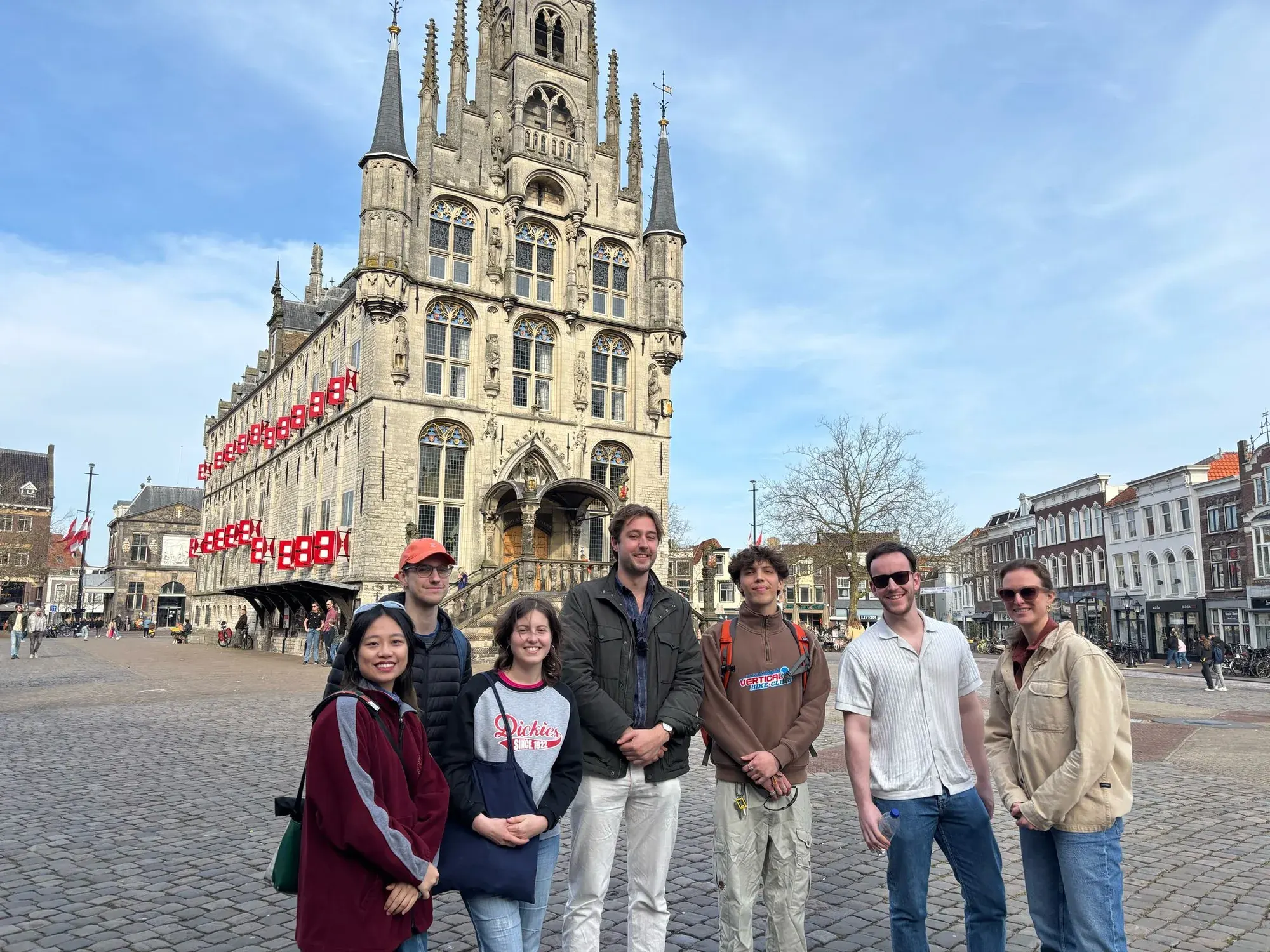
The Gouda cheese market is held on Thursday mornings from early April to the end of August, 10:00 to 12:30, on the Markt in front of the town hall, and it is free to watch. The 2027 dates are not published yet; in 2026 the season ran from 2 April to 27 August, with no market on 14 May (Ascension Day) or 25 June. It is a re-enactment with real cheese, real farmers and real trading in it, and it is worth a morning if you are in the west of the Netherlands on a Thursday; it is not worth reorganising a whole trip around. Outside the season, Gouda is still the better cheese town to visit, because the Waag, the church windows and the working farms in the polders around it do not depend on the calendar.
This guide covers what actually happens on the square, what is theatre and what is not, how Gouda compares with the Alkmaar, Edam and Woerden markets, how to see a working cheese farm, and how to get there from Rotterdam, The Hague, Utrecht and Amsterdam.
When is the Gouda cheese market?
Every Thursday from 10:00 to 12:30, April to August. The 2027 season had not been published when we checked on 7 November 2026. In 2026 the market ran from 2 April to 27 August, skipping 14 May (Ascension Day) and 25 June, according to the Welkom in Gouda cheese market page. If 2027 follows the same pattern, that means the Thursdays from 1 April to 26 August 2027, with no market on Ascension Day, 6 May 2027. Treat those as expected dates, not confirmed ones, and check the same page before you book trains.
Arrive by 09:45. The opening at 10:00, when the carts are in place and the first lots are being weighed and haggled over, is the busiest and most photogenic part. By 12:00 the trading is winding down and the crafts stalls around the square take over. On some Thursdays there is also a children’s cheese market behind the Waag; in 2026 it ran on two Thursdays in late April and on the Thursdays from late July to the end of August, according to the Welkom in Gouda visitor guide.
What is real and what is staged?
The short answer: the cheese market you see today is a heritage event run for visitors, and the cheese on the square is real farmhouse Gouda that does change hands. Both things are true at once.
What is real:
- The cheese. The wheels on the carts are Boerenkaas (farmhouse cheese) from farms in the polders around the town, places like Stolwijk, Haastrecht and Reeuwijk, which is where Gouda cheese has always been made. The city of Gouda was the place it was weighed, taxed and traded, never the place it was produced.
- The weighing. Lots are weighed on the scales at the Waag, the 17th-century weighing house on the square, as they were for centuries.
- The handjeklap. Farmers and traders settle a price by slapping palms and calling numbers until one of them accepts, then shaking on it. The people doing it are farmers and cheese traders, not actors.
What is theatre:
- The costumes, the horses and the cheese girls. Nobody trades cheese in 19th-century dress on a Thursday for commercial reasons. The traditional clothes, the horse-drawn carts and the young women in Gouda costume handing out samples are there because visitors like them.
- The volume. Most farmhouse Gouda is sold through wholesalers and cooperatives; the wheels on the square are a symbolic fraction of the trade.
None of this makes it a bad morning. It is a clear, well-run demonstration of how a Dutch cheese market worked, on the square where it actually happened, with cheese you can taste and buy from the people who made it. If you want a quiet look at the same buildings, come on any other day: the Waag is open, the Markt is a normal market square, and the church is three minutes away.
The Waag and the cheese museum
The Waag, the weighing house at Markt 35, is where the trade happened. It is a 17th-century building, with a relief above the door showing cheese being weighed, and today it houses the Cheese and Crafts Museum, on the town’s trade and the goods weighed here, with the original scales inside, a shop selling farmhouse cheese, and the tourist information office on the ground floor. According to the Welkom in Gouda visitor guide, it opens daily 10:00 to 17:00 from 1 April to 1 November and 10:00 to 16:00 in winter; in 2026 admission was €8.50 for adults including an audio tour, €3.50 for children aged 6 to 14, and free under 6. Check the Welkom in Gouda page on the Waag for 2027 prices before you go.
Two minutes further on, the Gouda Cheese Experience at Agnietenstraat 21 is a modern, interactive attraction about how the cheese is made and traded, open daily 09:00 to 18:00, with the last guided tour at 16:30; in 2026 a ticket cost €16 including a small tasting, €14.50 for children aged 5 to 15. It is aimed at families and first-timers, and like the Waag it is open on Sundays and Mondays.
Sint Janskerk: the reason to come on any day
The Sint Janskerk, behind the Markt at Achter de Kerk 2, is the longest church in the Netherlands and holds 72 stained-glass windows from the 16th and 17th centuries, the Gouda Windows, which the church describes as unique in Europe. This is the sight in Gouda that has nothing to do with cheese and everything to do with why the town mattered. In 2026 adults paid €11 and students €6.50, under-18s enter free, and the audio tour is included in the ticket.
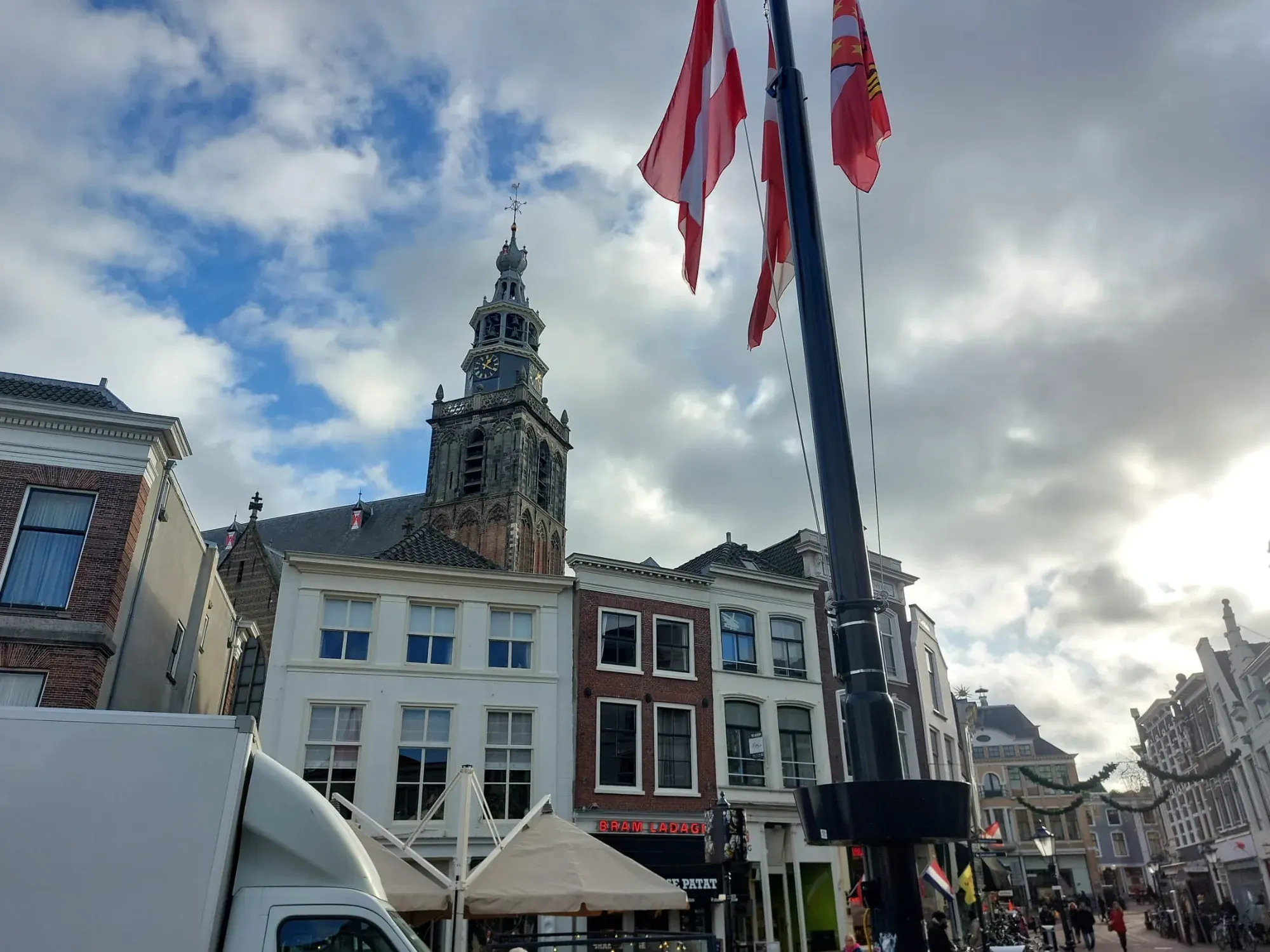
Opening hours: Monday to Saturday 09:00 to 17:00 from early March to the start of November, and 10:00 to 16:00 in winter, which runs until 1 March 2027. On Sundays the church is open only for services, not for visits. Check the Sint-Janskerk visitor page for closures on event days.
Stroopwafels
Gouda claims the stroopwafel, the thin syrup-filled waffle sold at every Dutch market, as its own. The claim is a local one and you will read different versions of the story; what can be verified is that Gouda bakers have been making them for a long time. Kamphuisen Siroopwafelfabriek in Gouda bakes to what it calls the original Gouda recipe from 1810 and runs a visitor experience with a factory view, syrup tasting and a warm waffle at the end, from €11.50 per person in 2026, Monday to Saturday. On a market Thursday there are stalls baking them fresh on the square. Buy them warm; a warm stroopwafel and a packaged one are two different foods.
Gouda, Alkmaar, Edam and Woerden compared
The Netherlands has several cheese markets. Which one suits you depends on the day of the week you are free and where you are staying.
| Market | Day | Hours | Season | Where | Best for |
|---|---|---|---|---|---|
| Gouda | Thursday | 10:00 to 12:30 | April to August; 2027 dates not yet published (2026: 2 April to 27 August) | Markt, in front of the town hall | Travellers based in Rotterdam, The Hague or Utrecht; a compact town with the church windows as a second reason to come |
| Alkmaar | Friday, plus Tuesday evenings 19:00 to 21:00 in July and August | 10:00 to 13:00 | Last Friday in March to last Friday in September; the 2027 season opens on 26 March | Waagplein | Travellers based in Amsterdam; the largest and longest-running spectacle, with big crowds |
| Edam | Wednesday | 10:30 to 12:30 | July and August (2026: 1 July to 19 August, plus an evening market on Saturday 8 August) | Jan Nieuwenhuizenplein, Edam | Combining with Volendam and Marken from Amsterdam |
| Woerden | Saturday | Mornings | Summer season | Kerkplein, Woerden | The most local-feeling of the four; a Saturday option between Utrecht and Gouda; check the current dates |
Sources: Gouda, Alkmaar, Edam. We could not confirm the Woerden schedule on an official site, so treat that row as a starting point and verify it.
If you can only see one and you are based in Amsterdam, Alkmaar is the easier trip. If you are based anywhere south of Amsterdam, Gouda wins on travel time and on having a real old town around it.
Visiting a working cheese farm
The market shows you the trade; a farm shows you the cheese. The polder country around Gouda, marketed as Cheese Valley and covering Gouda, Woerden, Bodegraven-Reeuwijk and the Krimpenerwaard, is where Boerenkaas is still made from raw milk on family farms, and several farms take visitors.
Two we can name from the Cheese Valley site:
- De Graaf at Buitenkerk 56 in Bodegraven, near the Reeuwijk lakes, run by the same family since 1928, with about 100 cows milked twice a day, a farm shop and the option to spend an hour with the farmer learning about milking and cheese-making.
- Jongenhoeve at Benedenberg 90 in Bergambacht, in the Krimpenerwaard south of Gouda, with guided tours and a farm shop selling its own farmhouse cheese and regional produce, open Monday to Saturday 09:00 to 18:00 according to the farm’s own site.
Both farms still invite visitors on their own websites (checked November 2026), but neither publishes a fixed tour timetable, so contact the farm before you go.
Neither is on a train line. You need a bicycle, a car or a guide with a plan. Farm visits are also seasonal in practice: the cheese is made in the morning, so if you want to see curd being cut rather than wheels sitting on shelves you need to be there early, and the farm needs to know you are coming. This is the kind of thing we arrange through Plan my trip: tell us your date and where you are staying, and we build a day that puts the farm in the right slot, usually before or after the market and the church.
Getting to Gouda by train
Gouda station is on the main line between Rotterdam and Utrecht, and Gouda is one of the easiest Dutch towns to reach without a car.
- From Rotterdam Centraal: direct Intercity, around 20 minutes.
- From Den Haag Centraal: direct, about 20 minutes according to the national tourist board.
- From Utrecht Centraal: direct, about 20 minutes.
- From Amsterdam Centraal: under an hour; check the planner for whether your train is direct or changes at Utrecht.
Check the live times on the NS journey planner; weekend engineering work on this corridor is common. From the station it is about ten minutes on foot to the Markt: out of the station, straight down the Kleiweg. Our guide to Dutch trains, trams and buses explains tickets and check-in.
Luggage lockers: Gouda is not on the NS list of stations with luggage lockers. If you are travelling with suitcases, leave them at Rotterdam Centraal, Den Haag Centraal or Utrecht Centraal (€9 small, €14 large for 24 hours at each) and come to Gouda light.
Practical details: Sundays, Mondays and mobility
Sunday. The cheese market never runs on a Sunday. The Sint Janskerk is closed to visitors on Sundays. The Waag and the Gouda Cheese Experience are open daily, Kamphuisen is closed, and Museum Gouda, on the Oosthaven, opens Tuesday to Sunday 11:00 to 17:00. Sunday is a quiet day to walk the old town, not a day for the cheese sights.
Monday. Museum Gouda is closed on Mondays. The Sint Janskerk, the Waag and the Gouda Cheese Experience are open. Shops open late.
Mobility. The Markt and the streets around it are laid in setts and brick with proper cobblestones around the Waag and the town hall, and on market Thursdays the square is crowded from 10:00. The town is flat. The Sint Janskerk has a step at the entrance but the nave is level. Our guides adjust the route for limited mobility if you mention it in the booking comment.
Rain plan
A market Thursday in the rain still happens, and the crowd thins, which is not a bad trade. Then move indoors: the Sint Janskerk (allow an hour with the audio guide), the Waag museum, the Gouda Cheese Experience and a stroopwafel bakery. Gouda’s centre is small enough that none of these is more than five minutes from the next.
Where to eat in Gouda
- Cheese to take home. ‘t Kaaswinkeltje on the Lange Tiendeweg is the traditional cheese shop the town itself points visitors to; the Waag has a shop too.
- Lunch on the Markt. The terraces facing the town hall are the obvious place on a Thursday; on any other day they are a calm spot for a lunch with the Waag in view.
- Stroopwafels. Fresh from a stall on market day, or from Kamphuisen with the experience tour.
- Along the canals. The Oosthaven and Westhaven, the tree-lined canal south of the Markt towards Museum Gouda, have cafés with less turnover than the square.
- A full day. If you are eating in Delft in the evening, the full-day Delft and Gouda tour plans the meals around the two towns.
Frequently asked questions
Is the Gouda cheese market worth it?
Yes, if you are in the west of the Netherlands on a Thursday between April and August and can be on the Markt by 09:45. It is free, lasts two and a half hours and sits in a proper old town with the best stained glass in the country three minutes away. It is not worth a special trip from Amsterdam if Alkmaar’s Friday market is easier for you.
What time should I arrive at the Gouda cheese market?
By 09:45. Trading and weighing start at 10:00 and the first half hour is the liveliest. By 12:00 the cheese trade is finishing and the crafts stalls take over; the market ends at 12:30. Trains from Rotterdam, The Hague and Utrecht all take around 20 minutes, so a 09:00 departure is enough.
Is Gouda cheese actually made in Gouda?
No, and it never was. Gouda was the market town where cheese from the surrounding polders was weighed and traded; the cheese was and is made on farms in villages such as Stolwijk, Haastrecht and Reeuwijk. Boerenkaas, farmhouse Gouda made from raw milk, is the thing to look for; the name Gouda alone is not protected.
Can I visit a cheese farm near Gouda without a car?
Not easily. The farms that take visitors, such as De Graaf in Bodegraven and Jongenhoeve in Bergambacht, are in the polders with no rail link, so you need a bicycle, a taxi or a guided day with transport arranged. Tell us your date and base city through Plan my trip and we build the day around the farm’s morning cheese-making.
Gouda or Alkmaar cheese market?
Alkmaar is on Fridays, 10:00 to 13:00, from the last Friday in March (26 March in 2027) to the last Friday in September, and is the bigger show, easiest from Amsterdam. Gouda is on Thursdays, 10:00 to 12:30, April to August, smaller, and 20 minutes from Rotterdam, The Hague and Utrecht. Choose by your free day and your base.
Are stroopwafels from Gouda?
Gouda says so, and the town has been baking them for a very long time; Kamphuisen bakes to a recipe it dates to 1810. The wider story of who baked the first one is not something we can prove, so enjoy the claim for what it is. Buy them warm on the square on a Thursday.
Is Gouda open on Sundays?
Partly. The Sint Janskerk is closed to visitors on Sundays (services only), the cheese market does not run, and Museum Gouda is open 11:00 to 17:00. The Waag and the Gouda Cheese Experience open daily. A Sunday visit is for walking the canals and the Markt rather than for the cheese and church sights.
Book a private walking tour of Gouda
Our private walking tour of Gouda takes 1.5 hours and costs €199 per group of up to 20 people. It is private, so it is only your group and your guide, who meets you in front of the Weighing House (the Waag) on the Markt. Start times are flexible, so on a Thursday in season you can book it around the cheese market. Guides work in English, Dutch, German, French, Spanish and Italian. Tell us in the booking comment what you want the walk to focus on, the cheese trade, the stained-glass windows of the Sint Janskerk or the old canals, and the guide plans the route around it.
With a full day, the private full-day tour of Delft and Gouda takes 8 hours, from €600, with a cheese tasting at the Waag, lunch in Delft and the transfer between the two towns included. Prefer to walk on your own? The self-guided tour of Gouda works on your phone, and our Gouda destination page has more on the town.